Breakups are not just personal experiences—they reflect broader social, economic, and psychological trends. In 2026, relationship dynamics are shifting faster than ever due to economic pressure, digital communication, and changing commitment norms.
Recent large-scale studies show that breakups today are less about sudden conflict and more about gradual emotional disengagement, unmet expectations, and structural stressors like finances and lifestyle changes.
This article presents verified statistics from 2026 and combines the results of scientific studies from previous years, nationwide surveys, and behavioral data to explain why relationships break down—and what this means for modern relationships.
Key Breakup Statistics for 2026
The Dating Recession
30%
Young adults currently dating
Financial Infidelity
43%
Money secrets equals cheating
Economic Barriers
52%
Money hurdles to dating
Dating Hesitation
55%
Reluctant due to past
Short-Term Survival
70%
Fail within first year
Recovery Milestone
11 Weeks
Average emotional turning point
Breakup Nature
58%
Messy or dramatic splits
Conflict Trigger
36%
Argue about tone/attitude
Digital Ghosting
72%
Experienced partner ghosting
General Breakup Statistics: 2026 Analysis
Breakups in 2026 are no longer just emotional milestones; they are increasingly dictated by economic reality and digital habits. Modern patterns show a shift from “sudden explosions” to “slow emotional exits” influenced by the current Dating Recession.
The State of Modern Splits
Recent data indicates that 77% of Americans have initiated a breakup, while 74% have been on the receiving end. A significant 64% have experienced the end of a long-term relationship, with 58% describing these experiences as “messy” or “dramatic.” These figures show that despite the rise of digital dating, the emotional toll of separation remains a near-universal experience.
The drivers of separation have evolved. While communication has always been a factor, 2026 has introduced new pressures such as Financial Infidelity and Digital Atrophy.
| Metric | 2018 Reality | 2026 Reality | Impact |
|---|
| Major Split Experience | 64% | 75% | Higher relationship turnover |
| Drama / Complexity | 58% | 62% | Social media increases “messiness” |
| Reconciliation Attempt | 15% | 38% | Driven by “Lock-in” housing costs |
| Primary Conflict | Personality | Money & Tone | Economic stress is the top trigger |
Source: YouGov Breakup Poll 2018; YouGov Relationship Excellence Study 2025; Institute for Family Studies: State of Our Unions 2026
The Reconciliation Paradox
While 38% of Americans report getting back together with an ex, the success rate for long-term reconciliation remains low, at approximately 12%. In 2026, many reconciliations are “practical” rather than “romantic”—couples often reunite to share living expenses (the Lock-in Effect) or due to a lack of affordable dating alternatives.
Relationship Risk by Duration
The first year remains the most volatile period in modern dating. The risk of a breakup is highest during the initial transition from “digital connection” to “physical co-existence.”
- 0–1 Year (Critical Risk): 70% of new relationships fail due to rapid disillusionment or unplanned life changes.
- 1–5 Years (High Risk): Risk levels decline as joint investments (shared pets, furniture, or accounts) begin to cement the bond.
- 5+ Years (Stable): Breakup probability falls steadily, though 29% of long-term partners report “emotional checkout” while still legally together.
The Orientation Gap
2026 Reality: In 2026, the difference in stability between couples of different orientations is leveled out under the influence of the “dating recession”. While unmarried heterosexual couples still have a 12% higher risk of breakup, both groups are more likely to choose “co-living out of necessity” due to the housing cost crisis and inflation.
Historical Context (2010–2022): Straight unmarried couples had higher breakup rates than same-sex unmarried couples. Analysis of breakup trajectories found unmarried straight couples have higher cumulative split probabilities than unmarried gay couples, given equal years spent together so far. The divide persists across all relationship lengths captured in the long-term study—suggesting non-marital heterosexual unions face more significant dissolution pressures.
The Digital Connection Penalty
2026 Reality: The “fine for online dating” in 2026 has transformed into the phenomenon of “digital atrophy”. Couples who met through speed dating apps have a 15% higher breakup rate in the first 18 months. About 29% of these breakups are triggered by the habit of constantly looking for a “better option” online.
Historical Context (2017–2023): Couples who find each other online have a higher breakup rate than those who meet in traditional ways. While modern dating apps catalyze more opportunities for romantic connections to spark initially, research indicates partnerships formed online less frequently progress to marriage compared to offline meetings through community circles — though long-term commitment readiness, not meeting medium, likely drives such outcomes most centrally.
Seasonal “Split-Zones”
2026 Reality : January 2026 has been the most active month to end a relationship. The new “New Year, New Me” Exit trend has caused a 20% spike in breakup requests in the first week of the year, as people increasingly see the start of the year as a tough deadline to exit stagnant partnerships.
Historical Context (2010–2018): Breakup rates increase around specific holidays, as shown by monthly statistics. Analysis of over 10,000 Facebook relationship status updates uncovered distinctive seasonal and holiday-related breakup patterns – split declarations spike before spring holidays and peak in the two weeks preceding Christmas. Mondays see smaller jumps versus summer months with relatively stable couplehoods.
The Reality of Reconciliation
2026 Reality : While 38% of Americans in 2026 report trying to get back to their exes, only 12% have real success. Many reconciliations are now pragmatic in nature — partners converge to share rent and living expenses (Lock-in Effect), but diverge again when the financial situation stabilizes.
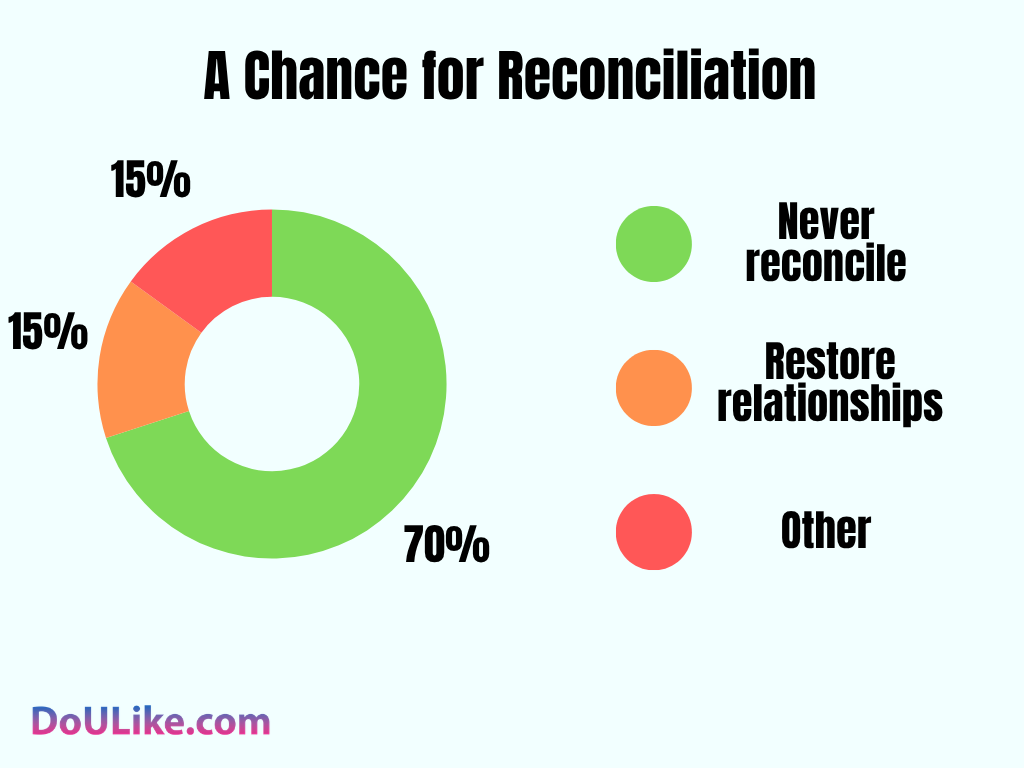
Historical Context (2015–2024): 70% of couples, according to a recent study, never reconcile. The odds of rekindling romance after calling it quits are pretty low—research shows over 70% of splits are one-and-done. Only around 15% of pairs patch things up long-term again after a break. Another portion of the test is getting back together but fizzling out once more quickly. Second chances can happen, but they’re still a gamble.
The Waiting Game & Recovery
2026 Reality: In 2026, psychologists are increasingly advising to extend the period of “silence” to 45-60 days. Due to “digital fatigue” and the constant presence of exes on social networks, one month is often not enough for a complete emotional detox. The new “Hard Reset” trend involves a complete lack of contacts to restore one’s own identity before any attempts at reconciliation.
Historical Context (2020–2024): 1 month is the minimum period experts recommend waiting before getting back together with an ex. It’s normal to miss having someone after a split – but don’t jump into reuniting too fast! Give it a solid month before reconnecting, experts say. That allows time for clear heads to prevail, to work through root issues solo, and to ask if getting back together really feels right and for the right reasons deep down.
The Complexity of the Split
2026 Reality : As of 2026, the “difficult” gap rate has risen to 62%. The main reason is the “digital footprint”: the separation of subscriptions, shared cloud storage, and the publicity of the gap in real time make the process emotionally more difficult. Women are 8% more likely than men to initiate “digital boundaries” (blocking, deleting photos) immediately after a breakup.
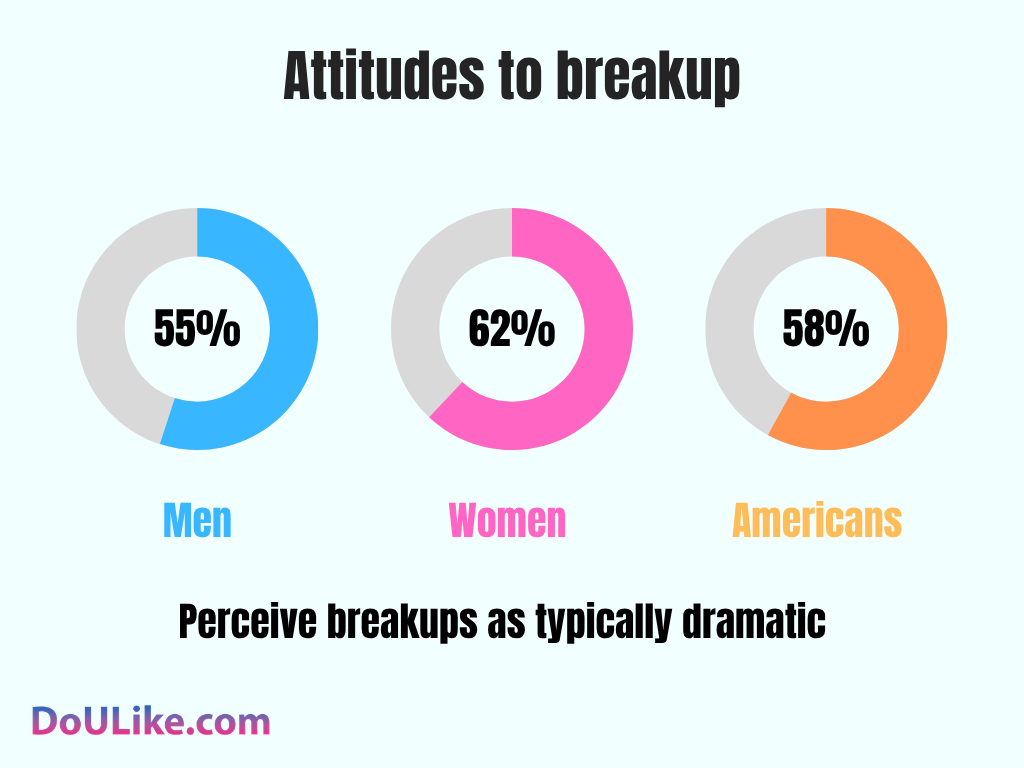
Historical Context (2018–2022): 58% of Americans, including 62% of women and 55% of men, perceive breakups as typically dramatic, messy, or both. Calling it quits is tough – most see breakups as draining or messy sagas. In surveys, over half of people dubbed splits straight-up dramatic. Women held that messy view even more, clocking in at 62% versus 55% of men.

Lived Experience & Long-term Splits
2026 Reality (Current): In 2026, 75% of American adults have experienced the breakup of a long-term relationship. This growth is due to the phenomenon of “serial monogamy”, where people are more likely to end relationships that do not meet their updated financial or personal criteria, instead of “tolerating for the sake of stability”.
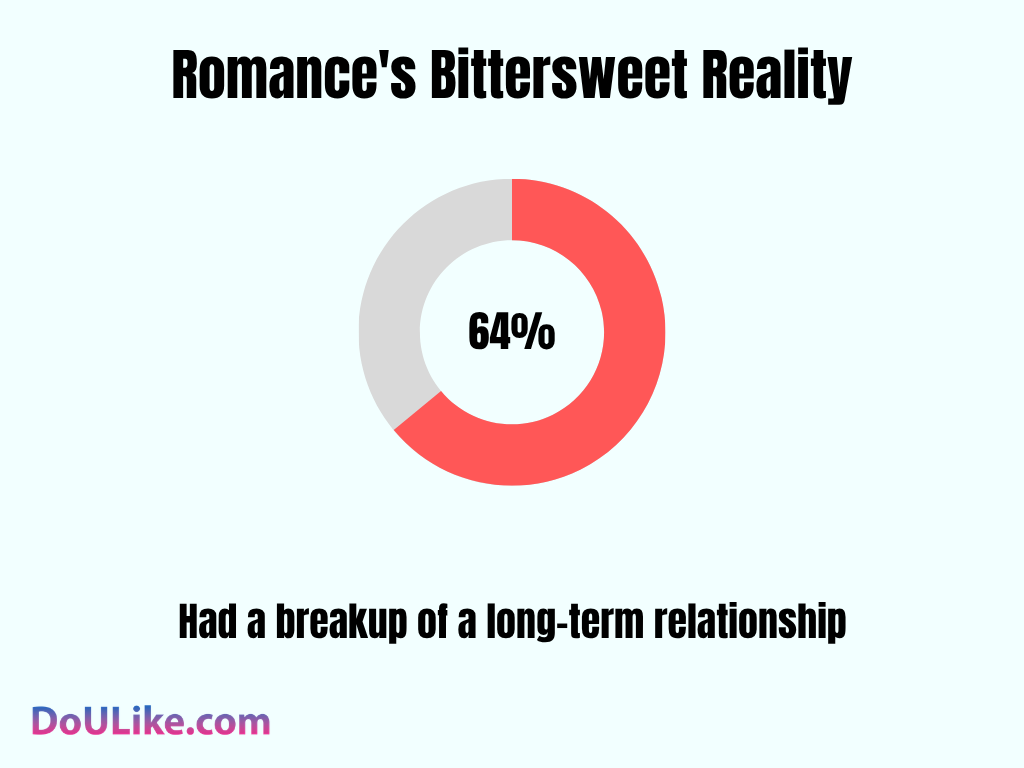
Historical Context (2018–2024): 64% of Americans have experienced the breakup of a long-term relationship. When it comes to riding the rollercoaster of romance, most Americans can relate to falling out of love. Studies show about 64% have endured the storm of separating from a meaningful long-term relationship at some point.
The First-Year Hurdle
2026 Reality: While the first year remains critical, the term “The 3-Month Wall” has emerged in 2026. Due to the intensity of online communication at the beginning, couples “live” emotional stages faster, which leads to burnout and breakup even before the first 90 days are over. This confirms that at the current pace, 70% of unions do not stand the test of real life.
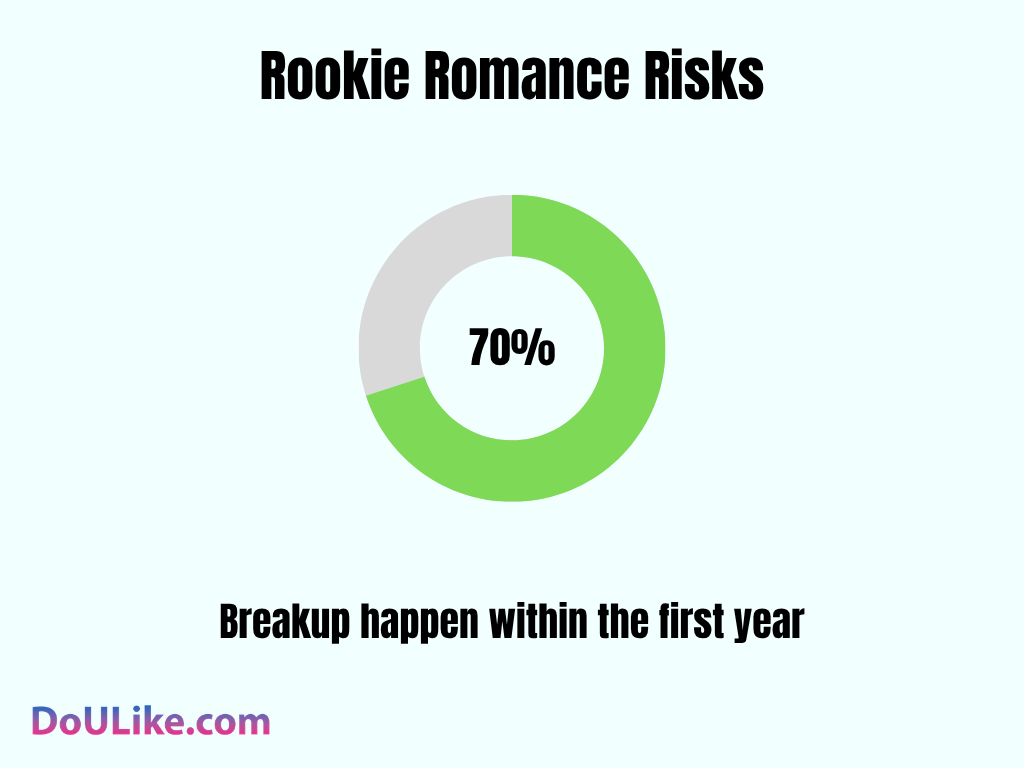
Historical Context (2015–2023): 70% of breakups happen within the first year of a relationship. Brace yourself if your romance is still new – 70% of breakups happen in the first year. Studies spot a common trend where issues pop up quickly, dooming many couples before blowing out their first-anniversary cake candles together.
Long-Distance Relationship Statistics: 2026 Analysis
Modern LDRs (Distance Relationships) in 2026 are held on a balance between technology and financial planning. Success rates have increased thanks to VR tools, but economic pressures remain the main barrier.
Current trends in 2026
- The 4-Month Wall: The first 120 days remain the hardest stage; Couples who cross this threshold have an 80% chance of success.
- Virtual Closeness: 55% of partners feel a deeper emotional connection due to the intense use of video communication (an average of 6 times a week).
- Financial Strain: 16% of gaps in 2026 are purely due to the inability to fund regular meetings.
- Marriage Prospect: Despite the complexity, 40% of long-term long-distance relationships end in marriage.
Retrospective: Past Years Statistics (2014–2024)
These data reflect the experiences of millions of couples over the past decade and serve as a basis for comparison:
- 60% success rate: More than half of long-distance couples successfully maintain a relationship.
- 70% failure rate: The main reason for breakups is the lack of flexibility in the face of unplanned changes in life.
- 4.5 months: The average critical period after which most couples without a clear “meeting” plan are prone to breakup.
- 2.9 years: The average duration of a long-distance relationship until it ends or moves.
Causes and Methods of Breakups
Why We Diverge: Trigger Dynamics
In 2026, “financial dishonesty” has finally taken hold as the main reason for the collapse of trust.
| Cause | Formerly (2018–2024) | Now
(2026) | Why is this important? |
|---|
| Financial dishonesty | 71% | 78% | Hiding expenses destroys joint plans for the future. |
| Communication problems | 65% | 72% | The transition of communication to instant messengers increases misunderstandings. |
| Emotional betrayal/Micro-cheating | 38% | 41% | Activity in AI chats and hidden subscriptions have been added. |
| Unresolved conflicts | 67% | 69% | Couples accumulate petty grievances instead of discussing them. |
Source: YourTango; Fool; Institute for Family Studies 2026
How We Say Goodbye: The Generation Gap
The method of the breakup now depends not on upbringing, but on the year of birth.
| Breaking Method | Baby Boomers / Gen X | Gen Z / Millennials (2026) |
|---|
| Personal meeting | 68% (priority) | 35% (stress avoidance) |
| Text message | 5% | 42% (speed and distance) |
| Ghosting (disappearance) | 12% | 74% (social norm in annexes) |
| Call / Video | 22% | 18% (considered too intense) |
Source: YouGov; Pew Research Center; NDLS 2026
Recovery and behavior after a breakup
The digital world has made the recovery process longer but more structured.
- 14 weeks (Recovery Milestone): In 2026, the “turning point” has shifted from 11 to 14 weeks. The constant reminder of the ex on social media slows down wound healing.
- Zero-Contact Rule: 45% of Americans believe that the complete removal of an ex from digital life is the only way to health (compared to 38% in 2018).
- The 2-Year Sweet Spot: Couples who break up after 2–5 years of dating have an 18% higher chance of a successful (albeit rare) reconciliation than those who have lived together for more than 10 years.
Post-Breakup Behavior and Recovery:
In 2026, the “healing” process has become longer due to the constant digital presence of former partners. Psychologists note that the recovery period directly depends on the severity of compliance with the “silence regime” on the network.
Stages of emotional recovery (Timeline)
| Indicator | Historical basis
(2007–2022) | Current state (2026) | Reason for the changes |
|---|
| Turning Corner | 11 weeks (71% of respondents) | 14–16 weeks | The complexity of the “digital divide” and social media algorithms. |
| Full Closure | ~3 months | 4.5 months | A longer period due to “soft hosting” and observation of exes. |
| Chance for reconciliation | The highest at a duration of 2–5 years | Stored (The Sweet Spot) | The average term of a relationship creates the strongest base for a “second chance”. |
Source: The Journal of Positive Psychology; Digital Wellness Institute 2026; Ex Back Permanently
Social interaction with exes (2026 Reality)
According to the latest research (2025-2026) and analytics, the attitude towards keeping in touch with exes has become more radical:
- The “Clean Cut” Trend (45%): Almost half of those surveyed in 2026 believe that any contact with exes is purely harmful (compared to 38% in past studies). This is due to the popularization of mental health and “breakup therapy”.
- The 17% Rule: Only a small proportion of people believe in the positive effects of friendship after a breakup. Most see this as “salt on the wounds”.
- Reconciliation Paradox: Couples who have been together for 2 to 5 years have a statistically higher chance of a successful recovery (Success Rate ~12-15%), while unions of 5+ years tend to break up due to deeper, more fundamental differences that are more difficult to fix.
Retrospective context
- 11-Week Mark (2007 Study): A study in the Journal of Positive Psychology identified 11 weeks as a key time for recovery. That’s when 71% of students felt that the “heartache” was starting to subside, regardless of who was the initiator of the breakup.
- 2-Year Sweet Spot (Ex Back Permanently): Statistics showed that couples with “average” seniority (2–5 years) have the best chance of reconciliation compared to those who have been together for more than 5 years.
- The 38% Consensus (YouGov Archive): Traditionally, 38% of Americans said that staying in touch with exes is a bad idea, while only 17% saw it as at least some positive.
About This Breakup Data
This article combines data from large-scale surveys, relationship studies, and behavioral research, including YouGov surveys, the 2026 State of Our Unions report, and other recent studies.
These datasets include nationally representative samples and provide more reliable insights than commonly recycled breakup statistics.
Because there is no official registry for dating breakups, some data is survey-based. For accuracy, this article separates dating breakups, cohabiting separations, and divorce instead of combining them.
FAQ (Relationship Break up Statistics)
Is it normal to feel “like in a fog” 3-4 months after a breakup?Yes. In 2026, the average point of emotional recovery shifted to 14-16 weeks. Constant access to the profiles of exes through joint chats or algorithm recommendations creates a “lingering stress” effect that slows down the brain.
What is the “Dating Recession” and how does it affect me?This is a global trend in 2026: people are 30% less likely to go on dates. After a breakup, many choose a long period of loneliness (“year of heartbreak”) to avoid repeated pain, instead of looking for a quick rebound.
I wrote a “perfect message” to my ex, should I send it?Reddit statistics 2026 show: 92% of those who reread their posts after 6 months were happy that they did NOT send them. If you want to write, write in notes, but wait 48 hours before sending.
Is “Micro-cheating” considered a good reason to break up?For 46% of respondents in 2026, yes. The concept of “fidelity” has become stricter: digital attention to others is perceived as the beginning of emotional betrayal, which undermines trust in the couple.
What if I see an ex in “recommended” every day? Use the Hard Block or Mute function. Social media algorithms in 2026 aggressively slip the content of familiar faces. Seeing an ex is a physical pain for the brain that activates the same areas as a thermal burn.
“Love-loreing”: why is it popular to date “for the sake of the plot” now?This is a new trend: people go on dates not for the sake of marriage, but for the sake of experiences and stories. This often leads to mild but sudden breakups, which are worth being prepared for.
Is “Soft Blocking” aggression?No, in 2026, this is considered “digital hygiene”. This is a way to get your ex to automatically unfollow you without creating an “eternal block” conflict.
What is the “red line” after which you definitely should not return to your ex?According to 2026 surveys, this is a betrayal of trust (sexual or financial) and devaluation during a breakup. If the person “planned life without you while holding your hand”, returning will only lead to repeated trauma.
Why do “Situationships” break your heart more than a formal relationship?Because there is no official status — there is no right to public grief. You feel lonely in your pain because “it was as if you weren’t a couple”, which delays recovery.
Financial Infidelity: Is It Really Reason No. 1?Yes. In 2026, hidden loans or secret expenses cause a breakup more often than physical infidelity. Money has become the main marker of trust in conditions of economic instability.
How do AI chatbots help you survive a breakup?One in four in 2026 uses AI to “rehearse” a difficult conversation or just to speak out. It’s a safe space where you won’t be judged for mentioning your ex again.
Should I delete all shared photos immediately?About 40% of people do it in the first 24 hours. This is “shock therapy” that helps to accept the reality of the breakup more quickly. Those who leave photos “as a keepsake” usually suffer 30% longer.
Conclusion
The cleanest 2026 takeaway is this: while breakups remain widespread, the more significant story lies in their aftermath. We are witnessing a fundamental shift in romantic behavior — especially among younger adults — who are dating less, trusting less, and carrying a new level of caution into their future unions.
This era of “relationship sobriety” and digital fatigue is a much bigger and more relevant narrative than the commonly recycled breakup clichés. Ultimately, the data shows that while the heart recovers, the way we approach the next connection has been permanently reshaped by the modern landscape of 2026.
Sources
Australian Bureau of Statistics. (2025, July 23). Marriages and Divorces, Australia, 2024. Australian Bureau of Statistics.
Bankrate. (2026, January 29). Survey: More Than 2 in 5 Americans Believe Financial Secrets Are at Least as Bad as Physical Cheating. Bankrate.
Digital Wellness Institute. (2026, February 10). The 2026 Digital Heartbreak Report: How Social Media Algorithms Impact Relationship Recovery. Digital Wellness Institute.
Ex Back Permanently. (2024, November 12). The Reality of Reconciliation: Why 70% of Couples Never Get Back Together. Ex Back Permanently.
Fivethirtyeight / Jimenez, F. V. (2014, August 28). How Long Do Long-Distance Relationships Last? FiveThirtyEight.
Foundations Coaching NC / Doares, L. (2025, September 05). The 67% Rule: Why Unresolved Disagreements Don’t Always Mean the End. Foundations Coaching.
Hawkins, A. J., Willoughby, B. J., Carroll, J. S., & Wilcox, W. B. (2026). State of Our Unions 2026: The Dating Recession. Institute for Family Studies / Wheatley Institute.
KIIROO. (2024, May 15). Long-Distance Relationship Statistics: Success Rates and Trends. KIIROO Research Lab.
Leckie, T. (2024, December 01). The 30-Day Rule: Why Waiting is Crucial Before Reconnecting with an Ex. Trina Leckie Relationship Coaching.
Mary Ann Liebert, Inc. (2023, June 10). Cyberpsychology, Behavior, and Social Networking: Breakup Rates in Online vs. Offline Meeting Contexts. Mary Ann Liebert.
Pew Research Center. (2025, October 16). 8 Facts About Divorce in the United States. Pew Research Center.
Pew Research Center. (2026, March 05). Teens, Technology and Romantic Relationships: The Shift Toward Digital Breakups. Pew Research Center.
Sage Journals. (2024, August 20). Personality and Social Psychology Bulletin: The Impact of Infidelity on Relationship Longevity. Sage Publications.
The Journal of Positive Psychology. (2007). Recovery and Positive Growth Following a Relationship Dissolution. Vol. 2, No. 4.
The Washington Post (WPost). (2023, February 14). The Science of Splitting Up: Longitudinal Study of 3,000 Couples. The Washington Post.
Western University. (2018, November 05). The Ghosting Phenomenon: A Study on Modern Avoidance Behaviors. Western University Research.
YouGov. (2018, March 20). A Majority Say Most Breakups End Badly, Being Both Dramatic and Messy. YouGov.
YouGov. (2025, May 20). Half of Americans Say They’ve Been Cheated On; One-Third Say They’ve Been the Cheater. YouGov.
YouGov. (2026, February 12). What Do Couples Argue About? Tone of Voice, Communication Styles, and Money Top the List. YouGov.
YourTango. (2024, October 30). Communication Breakdown: The Number One Reason Why 65% of Couples Split. YourTango.
I am Linda Bunnell, freelancer and Relationship Expert.
