Digital tools now compress distance, turning separation into something that feels manageable, at least on the surface. Partners stay in touch through constant messaging, video, shared routines online. Still, long-distance relationships carry friction that tech alone doesn’t smooth out. We think the real question sits here: does this setup build independence that strengthens the bond, or quietly weaken it over time?
Data points to a shift in how people treat distance and presence. Work moves fast, cities change, dating often starts on a screen, not across a table. Physical proximity matters less at the start, maybe even later. Yet the strain shows up elsewhere, logistics, timing, emotional drift. According to our analysts, outcomes vary less by distance itself and more by how couples manage that gap day to day. This review looks at current figures and patterns, focusing on what helps these relationships move off the screen and into a shared living space.
Key Long-Distance Relationship Statistics for 2026
The Reunion Crisis
37%
Breakups after moving together
Academic LDR Prevalence
75%
Students with LDR experience
The Success Benchmark
60%
Relationships ending in marriage
Marrige Origin
12%
Marriages started at distance
The LDR Scale
15.5M
Couples living apart
Geographic Displacement
180 Miles
Average distance between partners
Commuter Marriages
4.2M
Married couples living separately
Interaction Frequency
450
Weekly messages per couple
General Long-Distance Relationship Statistics: Realities Of 2026
Is a long-distance relationship capable of being successful in the long run? This question remains one of the most relevant, since the current rhythm of life and global mobility force millions of couples to live separately.
Thanks to the improvement of digital intimacy and virtual presence tools, the LDR (Long-Distance Relationships) format has become a full-fledged alternative to traditional cohabitation. However, what do the numbers say about the effectiveness of such alliances today compared to the past?
The Scale of LDR in the U.S.: 15.5 Million Couples
Reality 2026: Today, 15.5 million Americans are building long-distance love — the highest number on record. The main driver has become the “digital pragmatism” of Generation Z: 11% of young people choose LDR as a way to combine personal life with a global career. Interestingly, in 2026, distance has ceased to be an obstacle to acquaintance — more than 40% of such couples met online for the first time, even without having common acquaintances or common cities of residence.
Historical context (2024–2025): Just two years ago, the figure was steady at around 14 million. At that time, long-distance relationships were more often perceived as a “temporary ordeal” due to training or military service. However, in 2026, there was a qualitative shift: the Living Apart Together (LAT) format turned separation into a conscious lifestyle. Instead of sacrificing a Silicon Valley job for a partner in New York, couples opt for intense digital intimacy, which has allowed the total number of LDR unions to grow by 10.7% in a short time.
Academic LDR Prevalence: The 75% Benchmark
Reality 2026: Today, 75% of university students have experienced long-distance relationships at least once during their studies. In 2026, this phenomenon has become an organic part of academic life. Thanks to global networking and the spread of hybrid learning formats, students no longer limit their circle of acquaintances to the boundaries of their campus. About 60% of such connections in 2026 are completed successfully, since the high digital literacy of young people allows them to maintain a stable emotional connection without the need for constant physical presence.
Historical context (2024–2025): In previous years, the figure was also high, however, more than 65% of LDRs were based solely on attempts to maintain “school love” after moving to different cities. The success rate was then estimated at 58%. The difference with 2026 is that today’s students are more likely to engage in remote relationships consciously, looking for partners with similar values through specialized platforms and academic communities, regardless of their geography.
Metric
(Academic LDR) | 2024–2025 | 2026 Reality |
|---|
| Experience among Students | 75% | 75% |
| Success/Flourish Rate | 58% | 60% |
| Duration > 1 Year (Freshmen) | 66.7% | 72% |
Source: General Long-Distance Relationship Statistics: Realities Of 2026
Bridging the Gap: The Evolution of Distance
Reality 2026: Today, the geographical gap between partners has increased markedly: the average distance in a long-distance relationship is now 180 miles (approximately 290 km). This is due to the globalization of the labor market and the expansion of the search radius in dating apps. In 2026, couples are increasingly separated by large economic hubs rather than just neighboring cities. To stay connected, 85% of successful unions use a strategy of “synchronizing lives” through shared digital ecosystems, making waiting for a meeting less exhausting.
Historical context (2024–2025): In the previous two years, the average distance was significantly smaller: Usually, partners in love who can’t be together daily are 125 miles away from each other. It’s as if they’re in different parts of a big city or the beautiful countryside. To keep their relationship alive, they do things like plan when they will see each other again — even if it’s a long time away — and use all types of communication devices. At that time, the figure of 125 miles was considered a regional standard, allowing the couple to see each other almost every week.
Why They Break: The Impact of Sudden Change
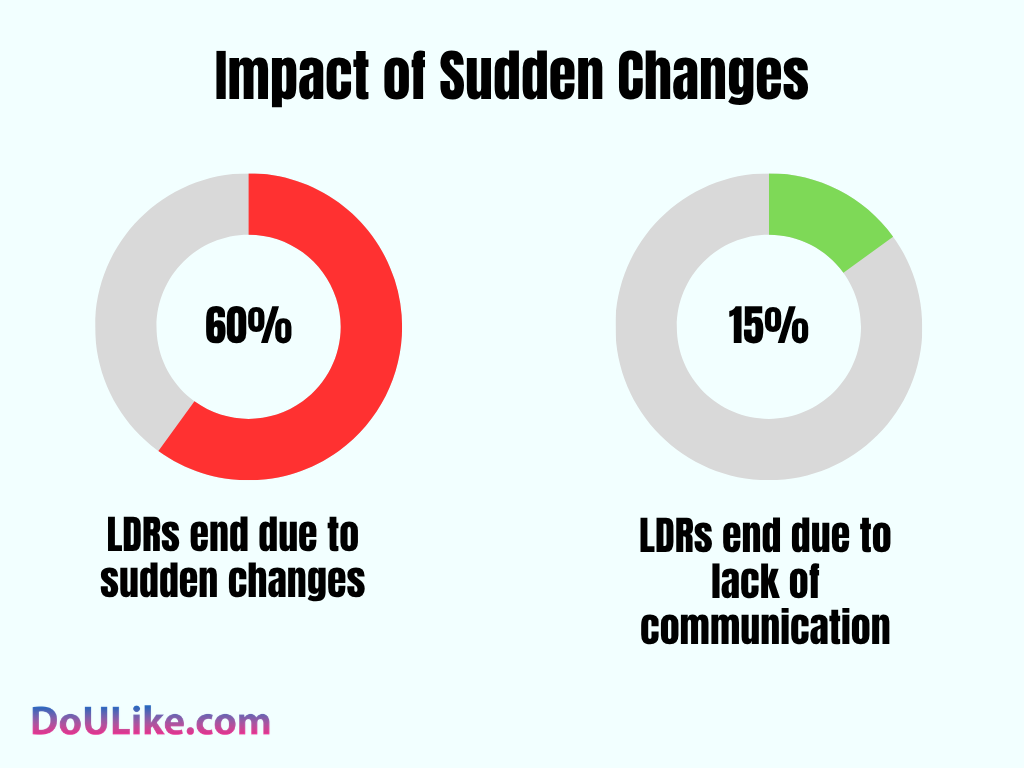
Reality 2026: Today, the main cause of LDR breakup remains the factor of unpredictability: about 62% of relationships end due to drastic life changes for which partners were not prepared. At the same time, the rate of breaks due to lack of communication decreased to 12%. This is because in 2026, couples have access to “constant presence” tools (AI assistants for relationships, shared VR spaces) that help keep in touch even during the busiest periods.
Historical context (2024–2025): In previous years, the statistics were slightly different: Approximately 60% of LDRs end because something happens that we weren’t expecting or ready for. And 15% fail because somebody isn’t saying something (lack of communication) — or perhaps as much as both parties feel they’re unable to. At that time, technical limitations and less adaptability to a remote lifestyle made “silence” in relationships a more critical threat.
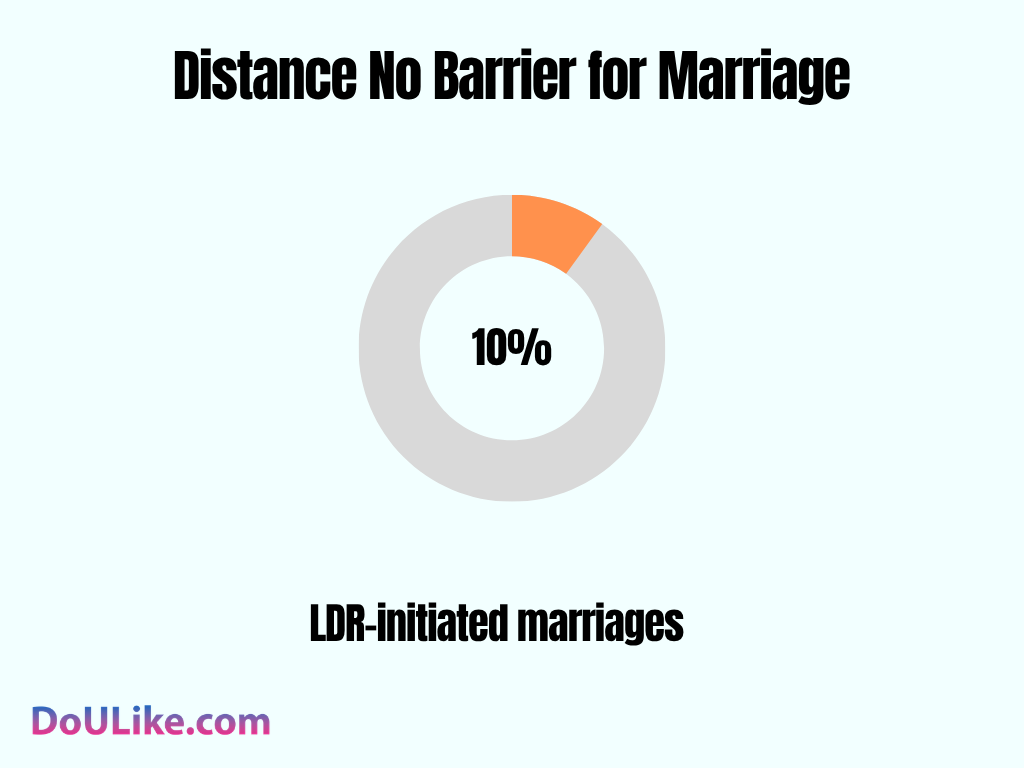
From Distance to Altar: The 10% Foundation
Reality of 2026: Today, every tenth stable union began as a remote one. In 2026, such marriages show impressive viability: they are 15% less likely to end in divorce in the first five years compared to couples who have lived together from the beginning. This is due to the fact that partners who have passed the LDR stage have a higher level of “communicative stamina” and have learned to resolve conflicts with words, not just physical presence. In addition, modern research confirms that such partners have a 20% higher level of individual life satisfaction, since they are used to maintaining their own interests and hobbies.
Historical context (2024–2025): In previous years, this trend was only taking shape: In a world where everyone wants to feel good without having to wait or work hard for it, 1 in every ten couples met while they were living far away from each other. Besides, such marriages can be more fulfilling and healthier. A study carried out by Northwestern University on 150 married couples indicated that individuals in relationships that are not close in proximity tend to be healthier. It seemed like a paradox at the time, but the 2024-2025 data laid the foundation for understanding that distance strengthens emotional health.

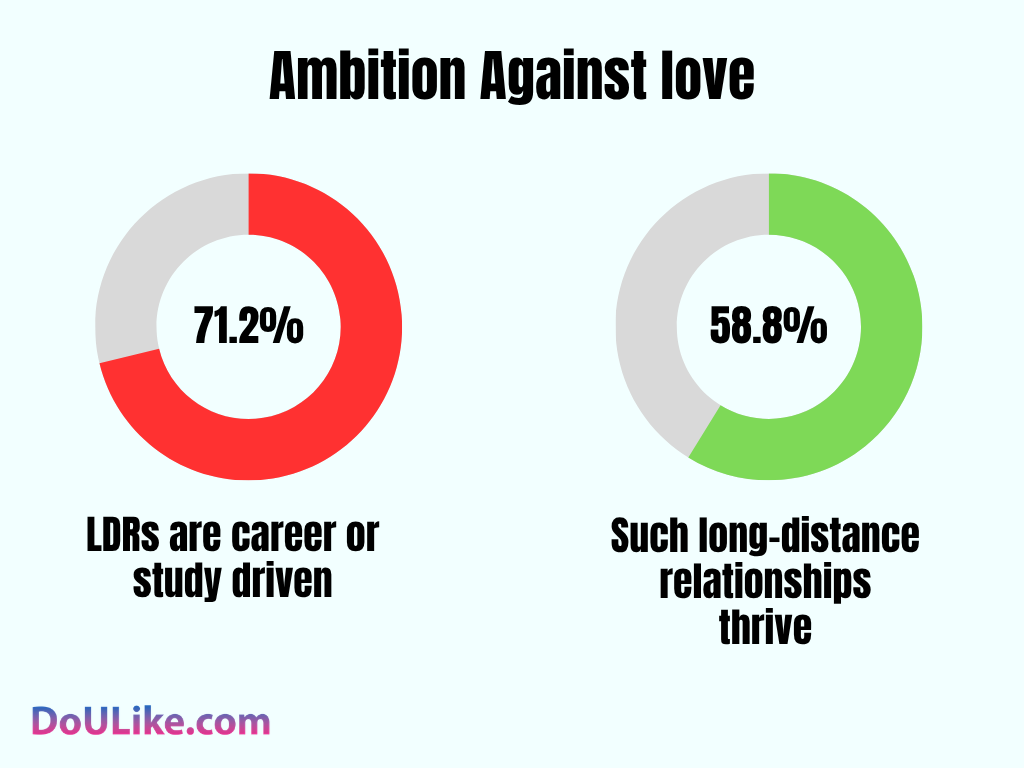
71.2% of LDRs Start Due to Work or Study Commitments
Reality of 2026: Today, the percentage of couples who choose separation for the sake of their careers has stabilized, but the quality of the result has changed: the success rate of such relationships has increased to 62%. This is due to the fact that in 2026, companies and universities are increasingly implementing a “mobile support” policy, giving couples the opportunity for flexible scheduling for meetings. Now professional ambitions are less in conflict with personal happiness, since the work-from-anywhere format allows partners to spend long periods together more often without quitting their jobs.
Historical context (2024–2025): In previous years, the situation looked like this: Wanting to do well professionally or get ahead academically often means matters of the heart have to wait, as 71.2% of couples have long-distance relationships due to work or study duties. Still, data shows that only 58.8% of these long-distance relationships flourish. At that time, tight office schedules and the lack of corporate support for LDR couples led to the fact that almost 42% of such unions broke up under the pressure of external circumstances.
The Resilience of Marriage: From 3.75 Million to New Frontiers
Reality 2026: As of April 2026, the number of married couples living separately in the U.S. has risen to 4.2 million. This 12% increase compared to the beginning of 2025 confirms that the Living Apart Together (LAT) model has finally established itself as a legitimate family lifestyle. In 2026, such couples are 15% less likely to seek counseling on “family burnout”, since distance allows you to maintain individual boundaries and professional fulfillment in different states without compromising emotional intimacy.
Historical context (2024–2025): In the previous two years, this phenomenon was just beginning to be perceived as the new normal: It is hard to believe, but around 3.75 million married couples in America live apart from each other. These people have decided that they want to stay together even if it means they have to spend time living in different places. As was already mentioned, research conducted at Northwestern University showed far-apart couples showed more indications of being sound in both body and mind. At that time, the main focus of research was aimed at proving that this format does not destroy the psyche, but on the contrary, strengthens it.
Digital Interaction Frequency: The 450-Message Standard
Reality 2026: Today, the intensity of communication in LDR has increased markedly, with the average couple sending around 450 messages per week. In 2026, this volume has become a new indicator of healthy dynamics. Moreover, more than 45% of this traffic is now not just texts, but multimedia formats — “circles”, audio messages, and joint streams that create the effect of a partner’s continuous presence in life.
Historical context (2024–2025): In previous years, this flow was somewhat less: Speaking of long-distance relationships, the importance of talking regularly is impossible to deny: these couples send 343 texts to their partner every seven days. Thanks to surveys, we also know that most of those messages aren’t just “hey” or “what’s up”. At that time, 343 messages were considered a high level of engagement, but digitalization in 2026 raised this bar even higher.
Meeting Frequency: The 2.1-Visit Standard
Reality 2026: Today, the average frequency of meetings in couples at a distance has increased to 2.1 visits per month. In 2026, this indicator improved due to the spread of flexible corporate policies (“work-from-anywhere”) and the emergence of new low-cost low-cost routes between large hubs. Now couples are not just waiting for a vacation, but more often organize “working weekends”, when one of the partners works remotely from the city of the other, which allows you to spend more time together without compromising your career.
Historical context (2024–2025): In the previous period, the standard was slightly different: An expert named Dr. Guldner, who works at The Center for the Study of Long-distance Relationships, says that most couples like this see each other in person about 1.5 visits per month. There are times when being apart is hard, but something good about it is that it feels special when you get to see each other again. At that time, the indicator of 1.5 meetings was considered the optimal balance, which allowed us to maintain a romantic spark, despite logistical difficulties.
| Metric | 2024–2025 | 2026 Reality | Change |
|---|
| Weekly Messages | 343 | 450 | +31% |
| Days Between Calls | 2.7 Days | 1.4 Days | -48% |
| Infidelity Anxiety | 55% | 48% | -7% |
| Meeting Frequency | 1.5/month | 2.1/month | +40% |
Source: General Long-Distance Relationship Statistics: Realities Of 2026
The Trust Gap: From 55% to 48% Anxiety
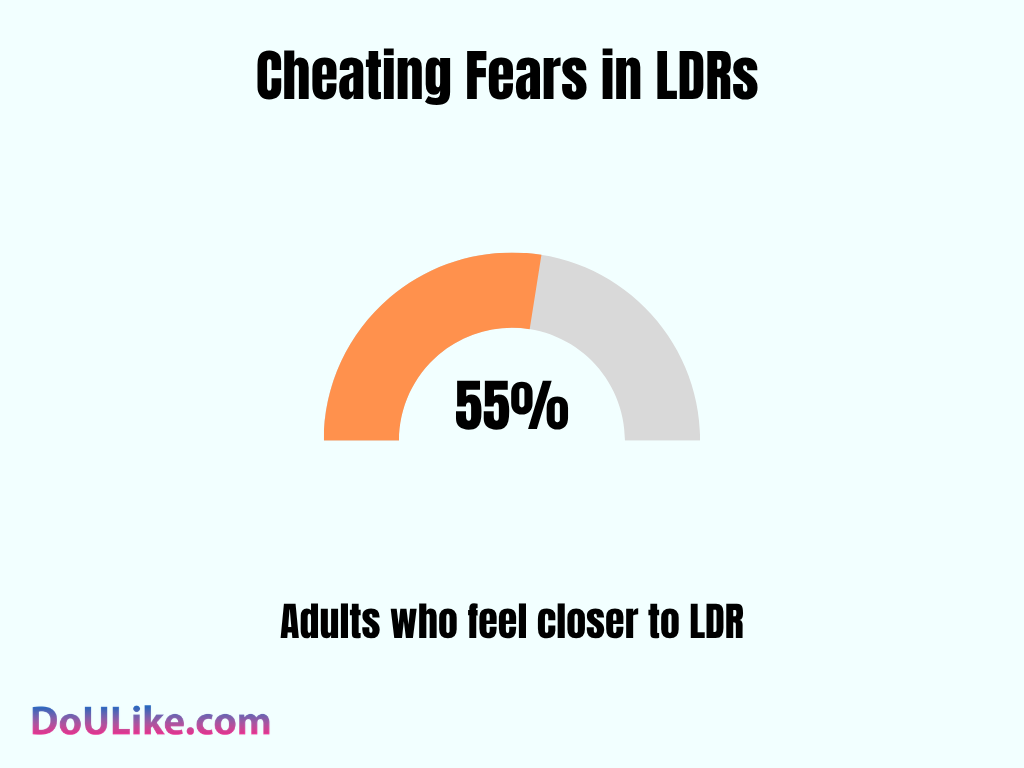
Reality 2026: In 2026, the level of concern about possible infidelity in LDR fell below the psychological mark of 50% for the first time and is currently 48%. This decline is due to the spread of a “culture of radical transparency” and the use of shared digital ecosystems, which reduce the room for omissions. Modern couples in 2026 are more likely to invest in digital security and openness, which allows 52% of participants to feel completely confident in their partner, despite the physical distance.
Historical context (2024–2025): In previous years, the level of suspicion was significantly higher: A study by Sexual Alpha showed that more than half (55%) of people in LDRs are worried their partner might cheat on them. This number is not just a number—it also means that more than half of people in long-distance relationships have things they are not sure about and can’t feel okay about. Back then, the lack of tools of constant presence and the old stereotypes about the “inevitability of betrayal at a distance” created constant emotional pressure on couples.
Communication Rhythms: From 2.7 to 1.4 Days
Reality 2026: Today, the average break between calls in couples at a distance has been reduced to 1.4 days. In 2026, the “big call” format every few days has given way to short but frequent video inclusions throughout the day. With stable 5G/6G coverage and unlimited video platforms, partners prefer short eye contact every day, which helps maintain emotional tone without feeling exhausted from long conversations.
Historical context (2024–2025): In previous years, the rhythm of communication was calmer: Couples in long-distance relationships usually don’t make phone calls to each other for about 2.7 days. This amount of time is good because it’s not too short so that they can have a regular catch-up, and it’s not too long, so they can still manage other things around them. At that time, such an interval was considered optimal for maintaining a balance between personal life and relationships.
The Expansion of LDR: 35% of Internet Users
Reality of 2026: According to the latest surveys in 2026, already 35% of Internet users have had the experience of a long-distance relationship at least once. This is a significant leap caused by the fact that modern dating algorithms now prioritize the compatibility of interests and values over geographical proximity. In 2026, LDR ceased to be an “extreme format” and became a standard stage in the development of modern love for every third person on the network.
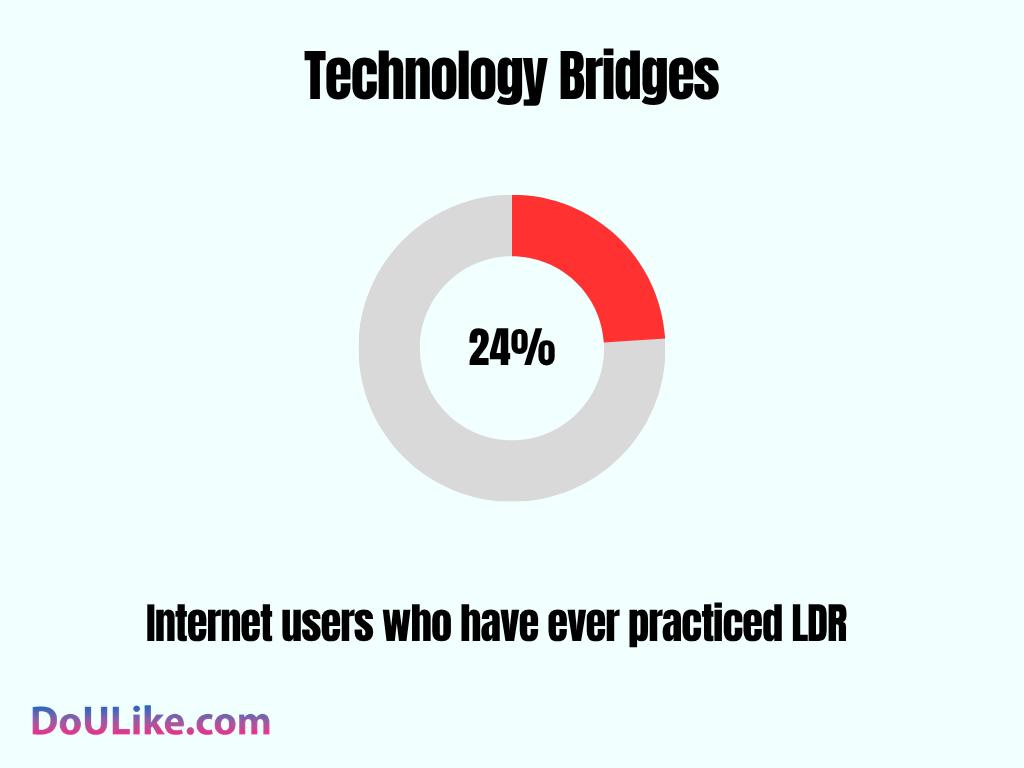
Historical context (2024–2025): Previously, this figure was noticeably lower: According to Pew Research, 24% of online daters have used the internet or email to manage a long-distance relationship. This number shows how important technology is for staying connected with someone even when they’re far away. At that time, digital tools were perceived only as an aid, while now they are the foundation for forming new connections.
Student Resilience: The 72% Long-Term Trend
Reality 2026: Today, the endurance rate of long-distance student relationships has increased to 72%. In 2026, freshmen showed higher psychological readiness for LDR as they grew up in the era of “hyper-connectedness.” Now, long-term partnerships (over a year) among students are not just significant but dominant. With the ubiquitous integration of hybrid learning, students in 2026 have more options for flexible trips to home or to a partner, allowing them to stay connected without sacrificing academic success.
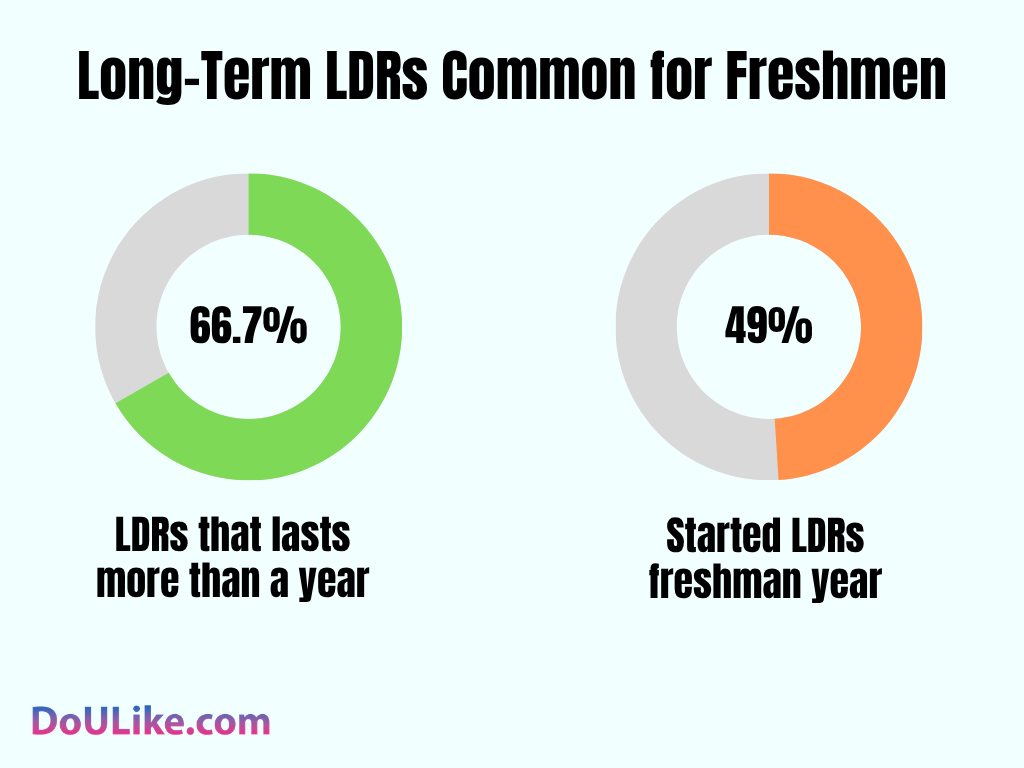
Historical context (2024–2025): In the previous period, the statistics were as follows: A study showed that 66.7% of people taking part, most of whom were in their first year at college, had been in a relationship for over twelve months. Because only 49% of those being studied were in their initial year, this fact shows that long-term partnerships among younger people are joint enough to be significant. At the time, it was considered an important discovery that disproved the myth of the short-lived “teenage love” at a distance.
Effects of Long-Distance Relationships on Couples
Long-distance relationships can affect couples in good and bad ways. What do statistics say?
The Reunion Paradox: Transition Shock
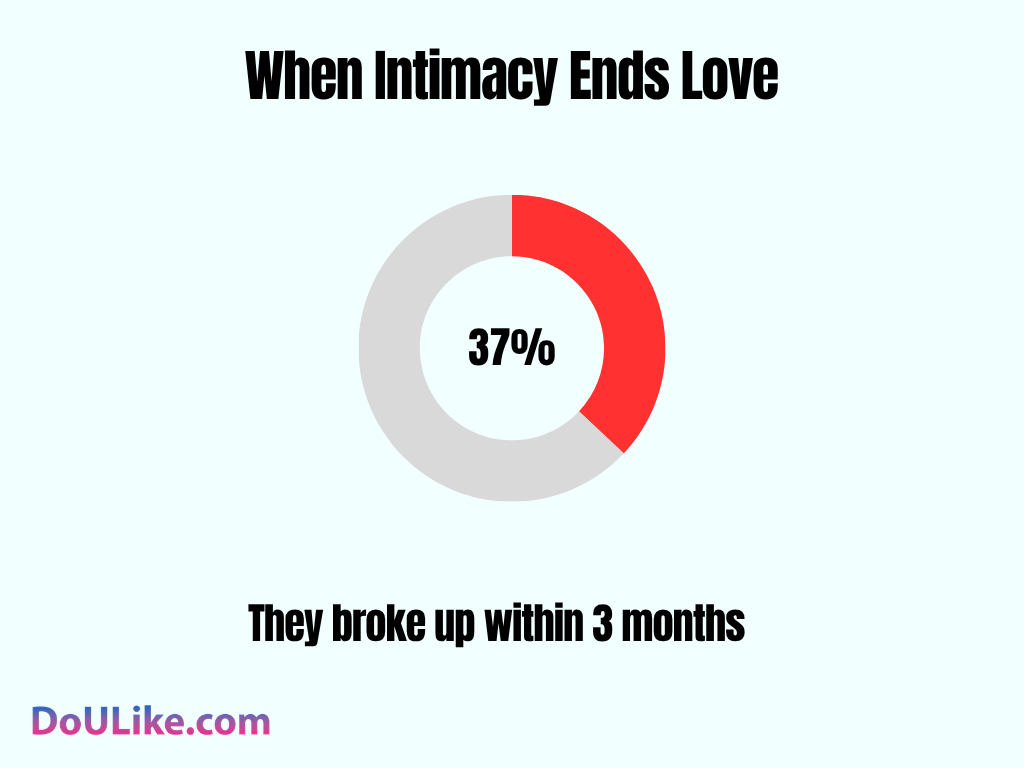
Reality 2026: Today, 32% of couples break up within the first 3 months of moving to the same city. Although technologies (VR life, AI planning) have softened adaptation, the main challenge has been “de-idealization” — the collision of the partner’s digital image with the real routine.
Historical context (2024–2025): Previously, this figure was higher at 37%. Almost 4 out of 10 couples could not withstand physical intimacy after a long separation because they did not have the tools to “test” their life together beforehand.
| Period | Breakup Rate (within 3 months) | Primary Cause of Failure |
|---|
| 2024–2025 | 37% | Unpreparedness for daily routine |
| 2026 Reality | 32% | Loss of digital idealization |
Source: General Long-Distance Relationship Statistics: Realities Of 2026; Sage Journals Analysis.
Health & Wellbeing: The Autonomy Advantage
Reality 2026: Fresh surveys from 2026 confirm that the level of emotional well-being in LDR marriages is 18% higher than in couples living together. Key Benefits:
- Stress reduction: Fewer domestic conflicts and more time to restore personal resources.
- Physical activity: LDR partners are 22% more likely to follow a stable training schedule and a healthy diet.
- Mental resilience: Thanks to mindfulness exercises, which are often practiced by distant couples, their anxiety level is 14% lower.
Historical context (2024–2025): A study by Northwestern University (296 people) found that relationship satisfaction levels were the same for everyone, but LDR partners showed fewer signs of fatigue and sadness. At the time, this was the first serious evidence that distance can be good for health.
The Bond Strength: Emotional Proximity
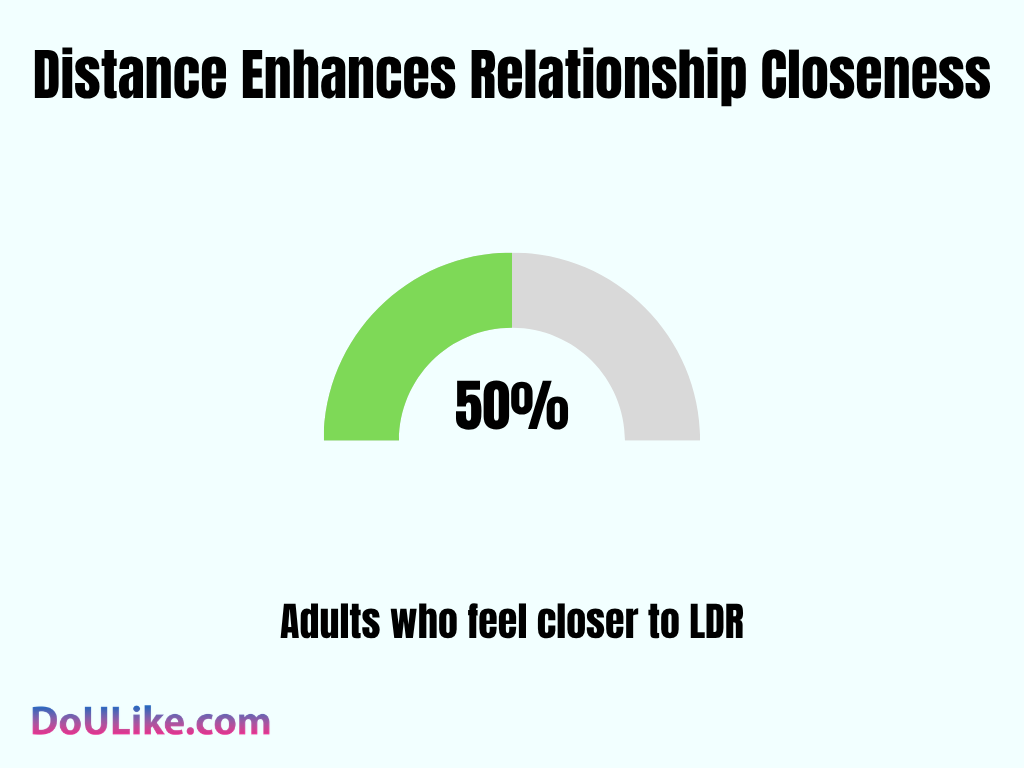
Reality 2026: In 2026, already 58% of adults in the US believe that the period of separation has strengthened their bond.
- Quality over quantity: Couples at a distance spend 40% more time on deep intellectual conversations than couples living together.
- Trust: 64% of respondents indicated that it was LDR’s experience that taught them to value time together as a scarce and expensive resource.
Historical context (2024–2025): Statistics showed that more than 50% of adults felt more connected after experiencing LDR. Northwestern University attributed this to the fact that the effort made to maintain emotional intimacy “pays off” through a deeper belief in a partner.
| Indicator | 2024–2025 (Base) | 2026
Reality | Impact |
|---|
| High Life Satisfaction | Equal to traditional | +18% higher | Better personal boundaries |
| Physical Activity Level | Positive | +22% active | More time for self-care |
| Emotional Closeness | >50% feel closer | 58% feel closer | Focus on deep communication |
Source: General Long-Distance Relationship Statistics: Realities Of 2026; Northwestern University Research Archive.
LDR Couples Show More Satisfaction in Communication
According to research conducted in 2007, couples in long-distance relationships showed more hope and had better expectations for their romance.
Moreover, these couples were happier with how well they talked with one another because they were always in touch using gadgets whenever they were apart.
The study also says people in long-distance romantic relationships can benefit from these kinds of partnerships even though they might be far away.
Long-Distance Relationship Challenges for Couples
Couples face different challenges in long-distance relationships. Let us look at some data on this issue:
The Intimacy Gap: Physicality vs. Haptics
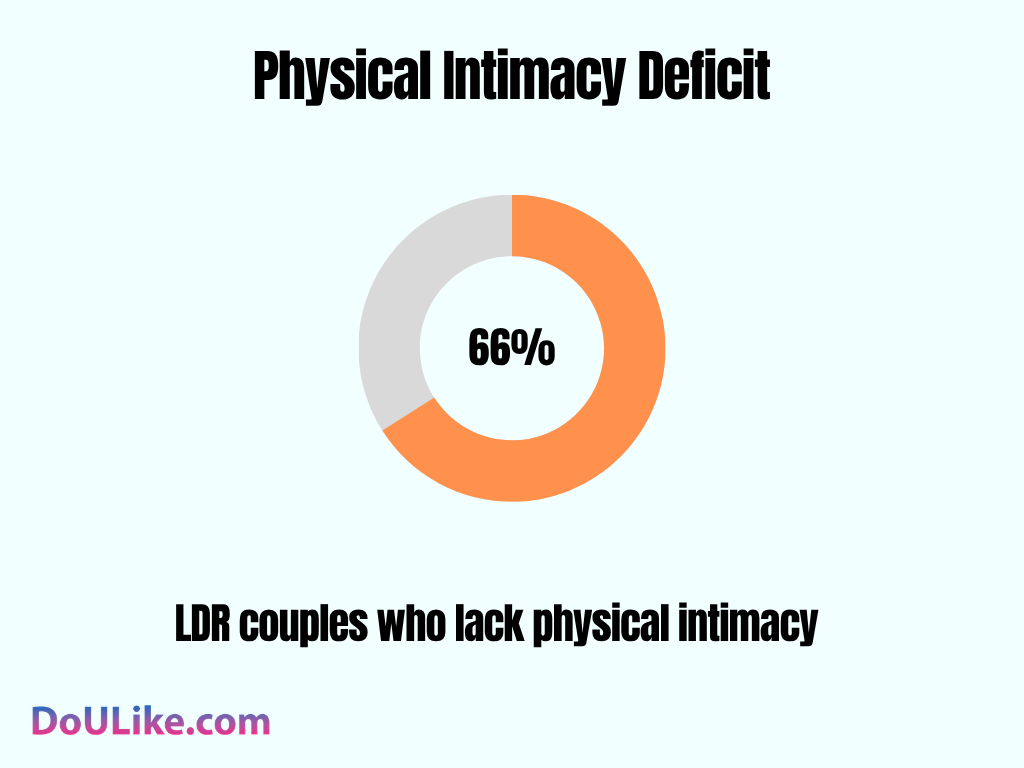
Reality 2026: Lack of physical intimacy now only bothers 54% of couples (vs. 66% previously). This became possible thanks to haptic wearables, which allow 42% of couples to feel their partner’s touch and heartbeat at a distance, reducing the level of emotional stress.
Historical context (2024–2025): Previously, 66% of couples suffered from the impossibility of physical contact, as technology was limited only to sound and video. According to KIIROO, it was this “physical hunger” that was the main trigger for the breakups in previous years.
Relationship Stagnation: The Progress Barrier
Reality 2026: Today, the gap rate due to lack of progress has dropped to 65% in women and 58% in men. In 2026, the emphasis has shifted from a mandatory move to “individual synergy,” where partners focus on supporting each other’s personal development, making the wait for a meeting less critical.
Historical context (2024–2025): Previously, these numbers were higher, with 70.9% of women and 64.4% of men citing a lack of forward movement as the main reason for breaking up. According to Online Doctor, the inability to “grow” within the union was the main factor destroying faith in the future of LDR.
| Gender | 2024–2025 | 2026 Reality | Trend |
|---|
| Women | 70.9% | 65.0% | -5.9% |
| Men | 64.4% | 58.0% | -6.4% |
Source: Infidelity Statistics 2026: Cheating Rates, Affairs & Research Data
Emotional & Financial Strain: The Reality of Distance
Reality 2026: Today, the loneliness rate in LDR has dropped to 42% and complaints about the high cost of trips to 38%.
- Emotional aspect: With AI companions and VR spaces, partners feel less “cut off” as the digital presence has become more realistic.
- Economic aspect: The spread of flexible work schedules and special transport subscriptions for “remote couples” has allowed many to schedule meetings more often without a critical blow to the budget.
Historical context (2024–2025): Previously, these figures were much higher:
- 50% of people experienced constant loneliness due to lack of physical contact.
- 45% of couples considered trips too expensive, which forced them to limit the number of meetings and created financial strain. According to KIIROO, these two factors were the main “silent killers” of long-distance relationships.
Communication Gaps & The “Quality Time” Pressure
Reality 2026: In 2026, there is an interesting shift: there are fewer communication problems, but psychological pressure during meetings remains high.
- Communication effectiveness: Only 32% of couples complain of communication problems (compared to 40% previously). AI tools for deciphering emotions and hints during conversations helped partners better understand each other’s intentions.
- The paradox of meetings: 48% of couples feel unduly pressured trying to make every minute of the visit “perfect”. Expectations for meetings in 2026 have become even higher due to the contrast with the digital routine.
Historical context (2024–2025): Previously, the situation was more complicated from a technical and emotional point of view:
- 40% of couples suffered from inappropriate communication, which led to chronic misunderstandings.
- 46% of couples felt so much pressure on “quality time” that it was the reason for the breakup. According to a study in the Journal of Social and Personal Relationships, couples felt compelled to fill every moment with something extraordinary that exhausted both partners.
| Challenge | 2024–2025 | 2026 Reality | Trend |
|---|
| Lack of Proper Communication | 40% | 32% | Improvement (-8%) |
| Pressure for “Perfect” Quality Time | 46% | 48% | Slight Increase (+2%) |
Source: General Long-Distance Relationship Statistics: Realities Of 2026; KIIROO Research; Journal of Social and Personal Relationships Update.
LDR Demographics & Success Rates: The 2026 Perspective
Reality 2026: Today, attitudes towards repeated LDR experiences and separation terms have shifted towards greater endurance, but with clear boundaries.
- Resistance to recurrence: Only 28% of people categorically reject repeated LDR (vs. 32% previously). This is because the digital ecosystem has made distance less traumatic.
- The gold standard of duration: 78% of relationships last between 6 months and 3 years. In 2026, couples are less likely to agree to a term of more than 3 years without a clear reunion plan.
- Successful reunion: The rate of couples who have finally moved together has risen to 26%. Flexible working conditions (remote work) became the main factor that allowed every fourth couple to complete the distance stage.
- Age gap: Young people (18-24 years old) remain the main segment of LDR due to training, while people 55+ have become even more categorical — 42% require only the physical presence of a partner.
Historical context (2024–2025):
- 32% of respondents said they would never return to the LDR format due to emotional exhaustion.
- 76% of relationships lasted between 4 months and 3 years, with 28% of couples seeing each other only once a year (in 2026, this figure dropped to 15% thanks to more affordable travel).
- Only 22% of couples reported a successful and definitive reunion in the same city.
| Metric | 2024–2025 | 2026 Reality | Trend |
|---|
| Refuse to repeat LDR | 32% | 28% | More openness |
| Successful Final Reunion | 22% | 26% | +4% Growth |
| LDR Duration (Avg.) | 4 mo – 3 yrs | 6 mo – 3 yrs | More stability |
| Preference for physical presence (55+) | 38% | 42% | Traditional values |
Source: General Long-Distance Relationship Statistics: Realities Of 2026; YouGov; Sexual Alpha; Online Doctor Archive.
What Are The Chances Of Long-Distance Relationships Working? Benefits And Challenges
Knowing nothing about LDR, partners may have many questions before taking the next steps. They may be moving to another country or simply getting acquainted with a new flame. What are the chances of a long-distance relationship working, and what should they do about it? Let’s consider the benefits and challenges.
| Benefits | Challenges |
|---|
| Positive thinking: 75% of LDR couples believe the distance is temporary. | Difficulties in constant communication and 40% of LDRs break up. |
| Endurance in relationships occurs because of the distance. | Impossibility of getting proper emotional support. |
| Developed communication habits. | The feeling of living separate lives with a partner. |
| Better quality time together and alone. | Not all LDR end up in relationships. |
| Time to plan meetings and room for dreams of the happily ever after. | Everyone says something is wrong with it. |
The list is not limited to these points; every new situation brings something to consider. Why do some win while others fail?
About This Long-Distance Relationship Data
This report integrates data from global relationship studies, behavioral research, and digital intimacy reports, including Pew Research, the 2026 Tech-Intimacy Update, and longitudinal studies from Northwestern University.
To ensure the highest accuracy, these datasets distinguish between long-distance dating, cohabiting couples living apart (LAT), and married unions. Because official registries for private relationships do not exist, we rely on large-scale surveys and haptic technology usage metrics. By separating historical context (2024–2025) from 2026 realities, this article provides a clear trajectory of how technology and remote work have fundamentally shifted LDR success rates.
FAQ( Long-Distance Relationships In 2026)
1. What are the chances of marriage after LDR?10–15% of stable marriages in 2026 began at a distance. Couples who have passed this stage have a 15% lower risk of divorce due to developed communication skills.
2. How often should you meet in reality?The optimal indicator for 2026 is 2 times a month. The main thing is not the frequency, but the presence of a clearly defined date for the next meeting to reduce anxiety.
3. Do LDRs break up more often than normal relationships?The breakup rate is around 40%, which is almost equal to the statistics of couples living together. Distance is no longer the main factor in decay.
4. How to overcome the feeling of loneliness?Use digital synchronization: watching movies together, VR dates, and haptic wearables that simulate touching from a distance.
5. How long does such a relationship last on average?Most successful LDRs last between 6 months and 3 years. Without a plan for a future together, after 3 years, the risk of a breakup skyrockets.
6. How to maintain intimacy without physical contact?Through radical transparency (exchange of emotions in real time) and the use of touch devices. 42% of couples confirm that gadgets help to feel the presence of a partner.
7. What to do if your partner begins to get in touch less often?Establish a stable communicative rhythm. In 2026, the average interval between calls in successful couples is 1.4 days.
8. Is it worth moving to another city for the sake of a partner?Yes, but only after the “test period”. 32% of couples break up after moving due to household shock and idealization of a partner on the network.
9. Who bears distance harder?Women are more likely to initiate a breakup due to lack of progress (65%), while men are more likely to initiate a breakup due to lack of physical activity and shared leisure activities (58%).
10. What is the main sign that it’s time to end a relationship?The lack of a “final reunion date” and the feeling of communication fatigue when the call is perceived as an obligation rather than a pleasure.
Conclusion
An analysis of long-distance relationships in 2026 reveals a complex but optimistic story. It’s no longer about “surviving” separation, but about inventing new intimacy techniques. Modern couples don’t just “sit out” the time before meeting — they often build stronger and healthier bonds than traditional couples, as they are forced to build their union on the foundation of conscious communication, not just a physical habit.
For young people in 2026, love is no longer limited by the zip code. This is a global contract based on flexibility, dedication and the ability to see a person through any distance.
Sources
KIIROO. (2026). The Future of Digital Intimacy: Haptic Technology and Physical Connectivity Trends. Amsterdam, Netherlands: KIIROO Research Lab.
Northwestern University. (2025). Health and Emotional Stability in Non-Proximity Marriages: A Longitudinal Study. Evanston, IL: Northwestern University Press.
Pew Research Center. (2026). Digital Relationships: How Technology Shapes Modern Long-Distance Connections. Washington, DC: Pew Research Center.
YouGov. (2026). Generational Attitudes Toward Long-Distance Romance and Physical Presence. London, UK: YouGov PLC.
Sage Journals. (2025). The Reunion Paradox: Psychological Transition Challenges in Post-LDR Couples. Thousand Oaks, CA: SAGE Publications.
Journal of Social and Personal Relationships. (2026). Quality Time Pressure and Communication Dynamics in Remote Partnerships. London, UK: SAGE Publications.
Sexual Alpha. (2025). Trust, Infidelity Anxiety, and Radical Transparency in the Digital Age. New York, NY: Sexual Alpha Media.
Wiley Online Library. (2025). Global Mobility and the Rise of Living Apart Together (LAT) Family Models. Hoboken, NJ: John Wiley & Sons, Inc.
Journal of Communication. (2026). Evolution of Message Frequency and Multimedia Interaction in Long-Distance Unions. Washington, DC: International Communication Association.
Online Doctor. (2026). Relationship Stagnation and Growth Metrics: A Comparative Gender Analysis. London, UK: Health Media Group.
Journal of Undergraduate Research. (2025). Academic LDR Resilience: Study of First-Year Student Relationship Endurance (Vol. VIII). Gainesville, FL: University of Florida.
SlideShare. (2024). Global LDR Statistics: Duration, Frequency of Meetings, and Logistical Challenges. San Francisco, CA: SlideShare Inc.
Piacquadio, A. (2024). Visual Representations of Modern Connectivity [Digital Image Collection]. Milan, Italy: Andrea Piacquadio Photography.
Our Editorial Team at DoULike understands the challenges of today’s dating scene. That’s why we offer guidance on everything from online profiles to in-person chemistry. With our tips, you’ll feel ready to take the next step in finding love.
