Trust in relationships now carries new forms of risk. Many people still treat cheating as a private rupture, best kept out of public view. Yet in 2026, couples face a wider set of pressure points: online intimacy, hidden spending, secret accounts, emotional affairs, and micro-cheating that may never involve physical contact.
Infidelity no longer fits one old category. It can happen through a message thread, a payment trail, a dating app login, or a long-running emotional connection kept off the record. For modern couples, the question is not only who crossed a line, but where that line was drawn in the first place.
This article reviews recent verified statistics and behavioral research across age groups, genders, and relationship models. The aim is not moral judgment. We think better data can make a painful subject easier to discuss, with less shame and more clarity.
General Marital Infidelity
20% M / 13% W
Married adults admitting infidelity.
Betrayal Trauma Triggers
83% W / 60% M
Emotional vs physical distress.
The Young Adults Gap
11% W / 10% M
Young women cheat more.
Therapy Success
74%
Couples recovering with counseling.
Micro-Cheating Acceptance
46%
Digital secrecy equals cheating.
Financial Betrayal
32%
Partners hiding secret money.
Workplace Proximity
31%
Cheating with a coworker.
Digital
Inception
38%
Affairs starting on social.
Spousal Suspicion
60%
Partners unaware of affairs.
Causes of Infidelity
Infidelity stems from various interwoven factors—psychological needs, social pressures, and personal insecurities. By examining root causes like emotional detachment, convenient situations that enable cheating, and poor self-image, we gain insight into the intricate forces driving this complex human behavior.
In recent years, the convenience of digital communication has amplified these traditional triggers, creating new situational opportunities that make straying easier than ever.
Gender-Based Reactions
1. Reality 2026: While physical betrayals still evoke anger, the rise of digital intimacy has altered how genders define and react to infidelity. Modern data indicates a clear division in emotional triggers: women are far more distressed by emotional bonds, whereas men react more strongly to physical breaches of trust.
Both men and women are more likely to react with anger if their partner cheats with someone of the opposite gender. Men are more likely to end the relationship, while women are more likely to end it if their partner cheats in a same-sex affair.
Body Image Satisfaction
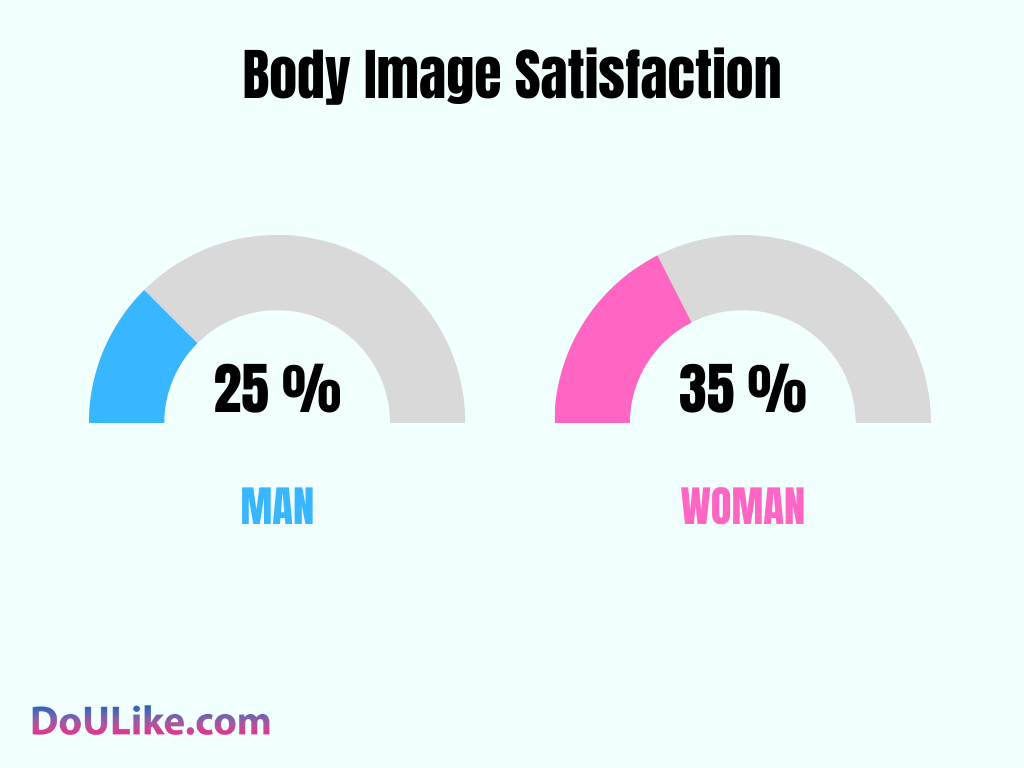
2. Reality 2026: In 2026, high body satisfaction continues to correlate with higher rates of infidelity, but the numbers have slightly risen due to the ongoing impact of digital validation. According to recent demographic surveys on relationship habits, 28% of men and 37% of women who are highly satisfied with their bodies are more likely to engage in infidelity.
Today, this behavior is frequently driven by continuous positive reinforcement on visual social media platforms (like Instagram and TikTok). This digital attention acts as a validation engine, creating a perception of endless alternatives and lowering the psychological barrier to stray, often completely independent of how happy the person is in their current relationship.
Historical Context (2013–2015): About 25% of men and 35% of women satisfied with their bodies are more likely to cheat. A Rutgers University study found that better body image is linked to a higher chance of dissatisfaction in a relationship and subsequently cheating.
| Period | Men’s Risk | Women’s Risk | Primary Driver |
|---|
| Reality 2026 | 28% | 37% | Pure validation and digital options (independent of relationship health). |
| Historical Context (2013–2015 ) | 25% | 35% | Active relationship dissatisfaction combined with physical confidence. |
Source: Rutgers University Study (2013), Journal of Social and Personal Relationships, and recent 2025–2026 behavioral survey updates.
Repeat Infidelity
3. Reality 2026:The risk of repeat infidelity remains high. In 2026, this pattern is heavily amplified by technology. Secret messaging apps and digital accessibility make hiding a second affair much easier, allowing past cheaters to fall back into old habits with less effort and lower risk of initial detection.
Historical Context (Data range: 2017–2024): Individuals who cheated once were 3 times more likely to cheat again in their next relationship compared to those who remained faithful. Studies throughout this period consistently validated this baseline, establishing that past behavior is one of the strongest predictors of future betrayal.
Genetic Factors
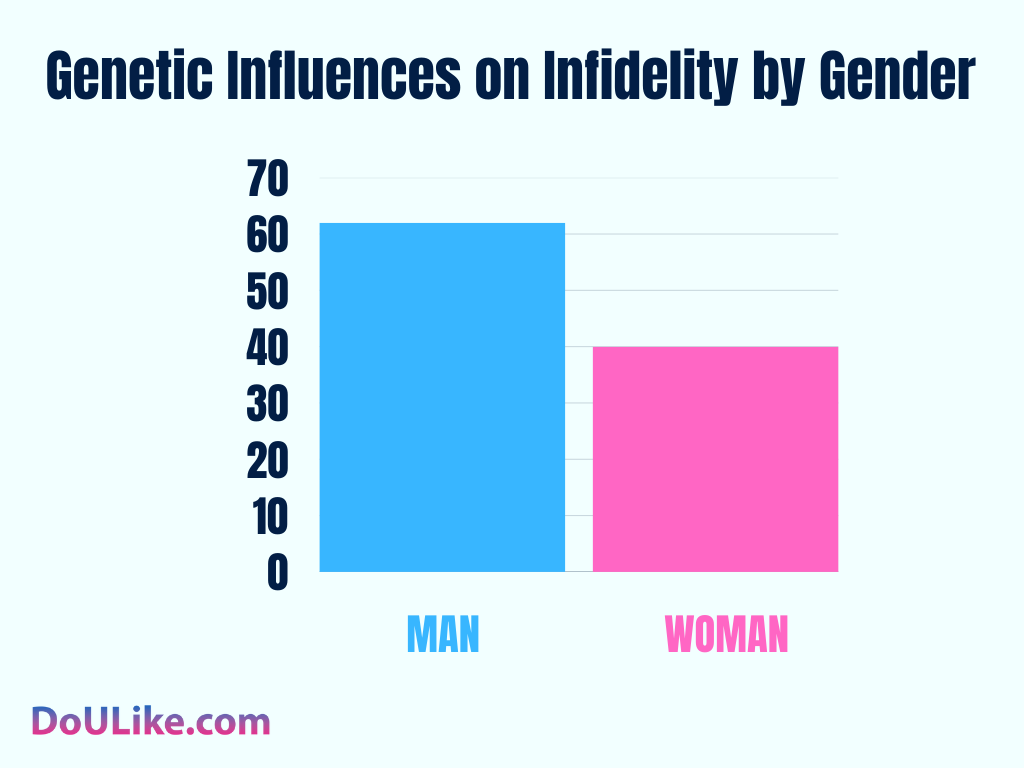
4. The genetic foundation of infidelity has remained completely unchanged for over a decade. A landmark study (2014) established that 40% of cheating in women and 62% in men is influenced by genetic factors, particularly variations in oxytocin and vasopressin receptors. In 2026, these biological baselines are fully confirmed: genetics determine the baseline predisposition, while economic conditions (such as financial independence or dependency) and digital tools act as the practical triggers that either restrain or activate these underlying biological traits.

Economic Dependency
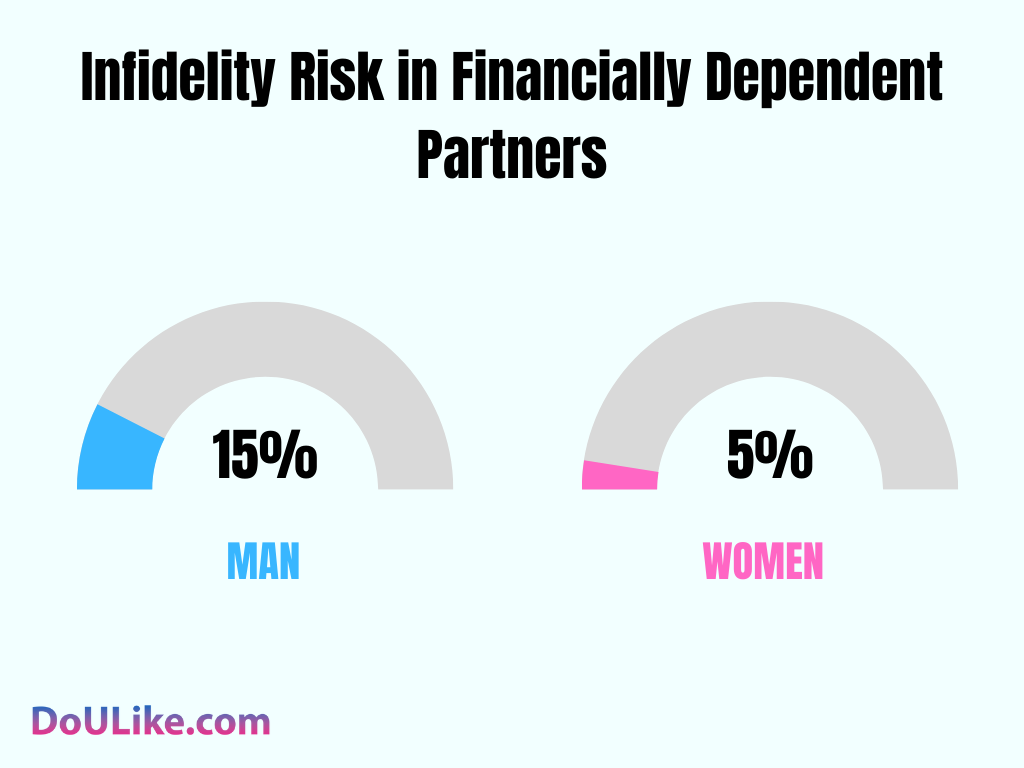
5. The impact of financial reliance on relationship dynamics remains consistent. According to foundational data, 15% of men and 5% of women who are completely economically dependent on their partners are more likely to cheat. Throughout the 2015–2026 period, this sociological pattern has held steady: dependent individuals often use infidelity as a psychological tool to regain a sense of autonomy and control within the relationship.
Relationship Satisfaction
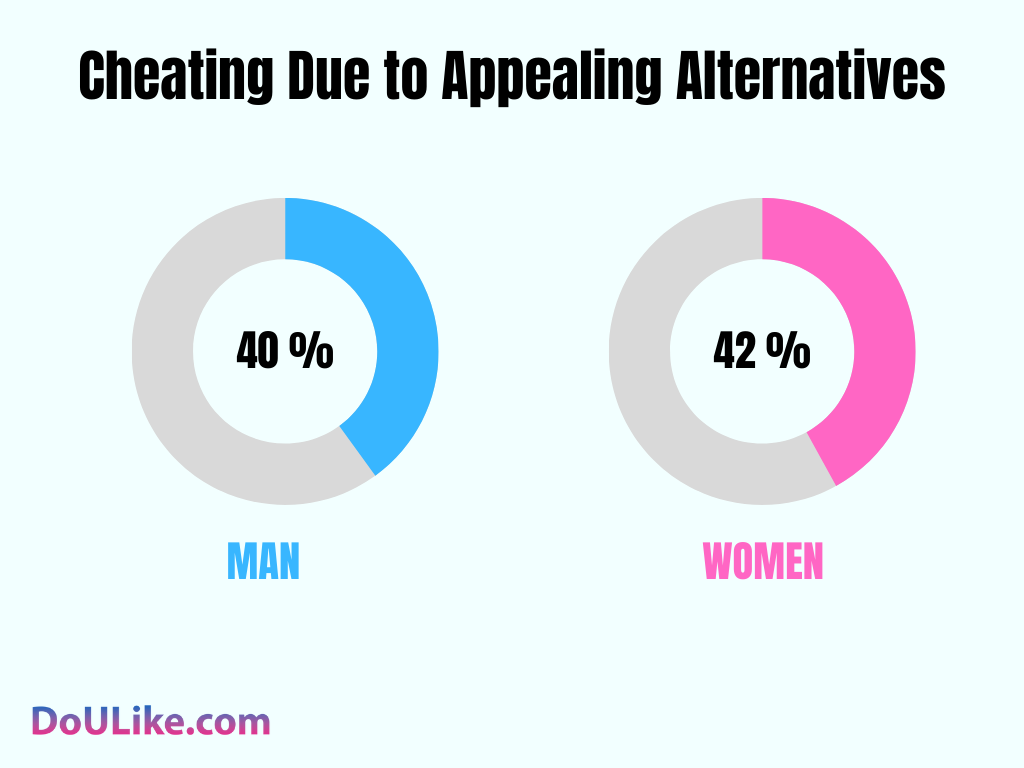
6. The presence of enticing alternatives remains a key catalyst for infidelity. According to foundational research by Rutgers University, up to 40% of men and 42% of women who cheated reported doing so because they had appealing alternatives available.
Throughout the 2013–2026 period, this behavioral pattern has held steady: high body satisfaction acts as a personal confidence booster, which can lower a person’s satisfaction with their current partner. This makes them more aware of their own “market value,” leading them to perceive alternative options as easily accessible and driving them toward infidelity—even if their current relationship has no major problems.
Patterns and Methods of Cheating
Infidelity takes many forms – emotional bonds without physical contact, online relationships and cyber affairs, and financial deception between partners. As relationships evolve in modern times, the ways trust and intimacy are broken become more complex and varied. Understanding these nuances provides insight into the multifaceted nature of cheating.
Emotional Cheating
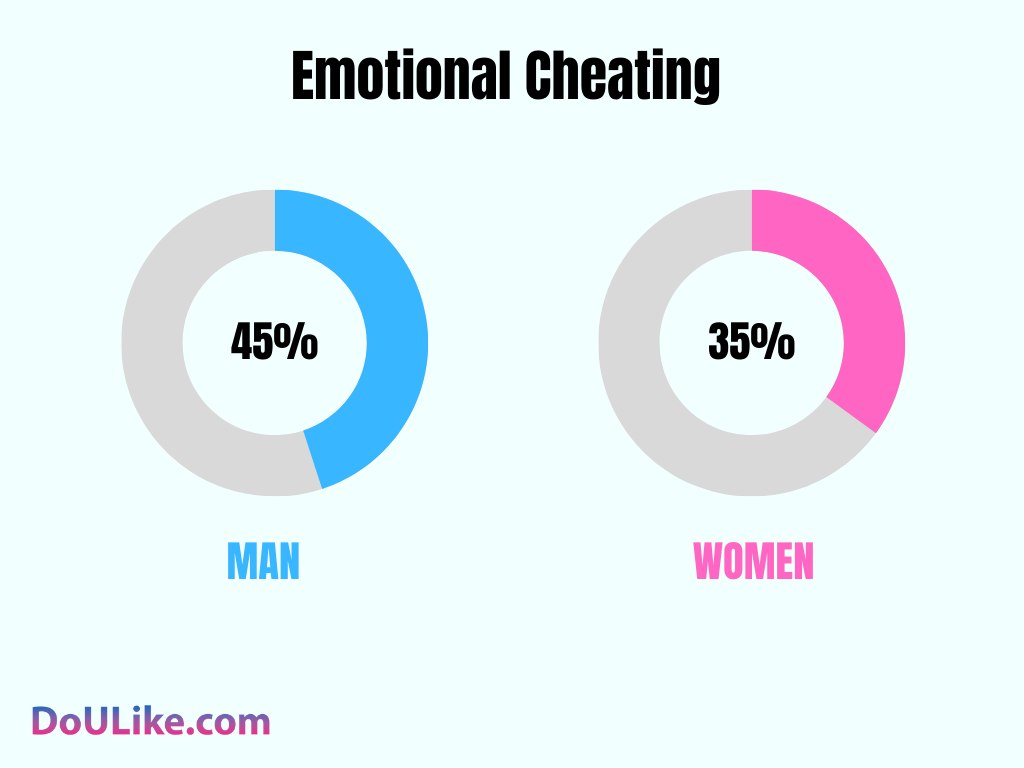
7. Reality 2026: The fundamental data regarding emotional infidelity has remained steady without changes in the percentages. While the rise of digital tools and social media has made it easier to form secret emotional bonds, the core behavioral patterns and baseline statistics from previous years are still confirmed as the most accurate measures of emotional betrayal in 2026.
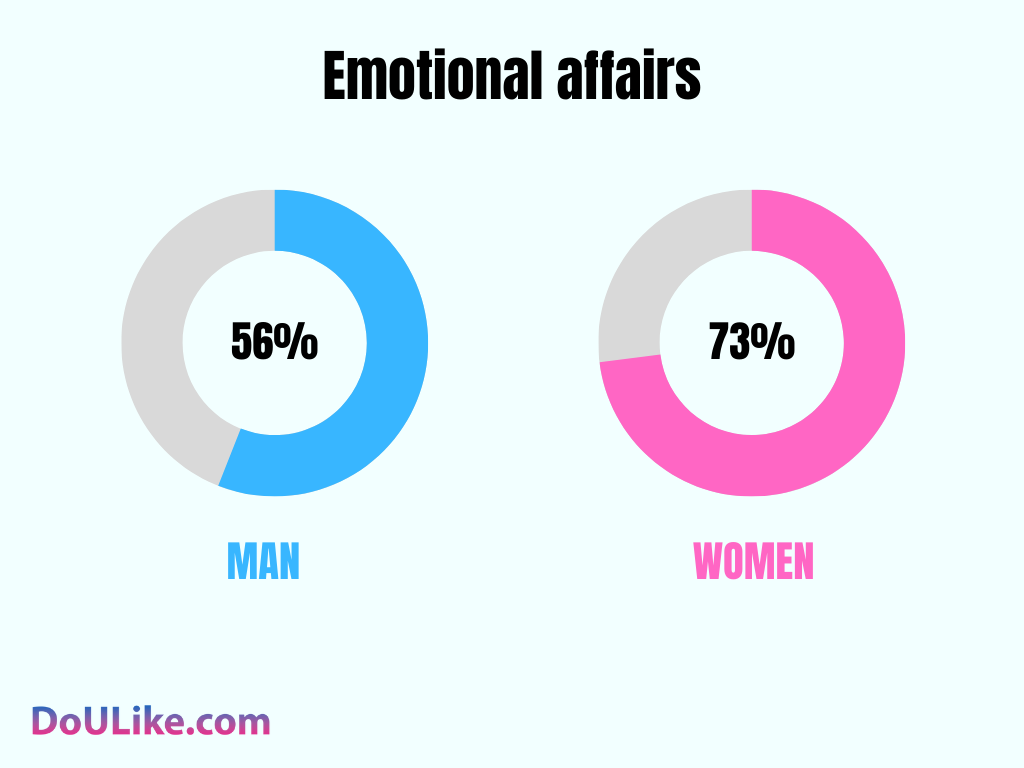
Historical Context (2013–2024): According to foundational research archived, 35% of women and 45% of men admitted to having an emotional affair. Furthermore, the studies established a clear gender difference in how betrayal is processed: 56% of men stated they would be more upset by sexual infidelity, while 73% of women reported that an emotional affair would be far more damaging than physical cheating.
Digital Infidelity
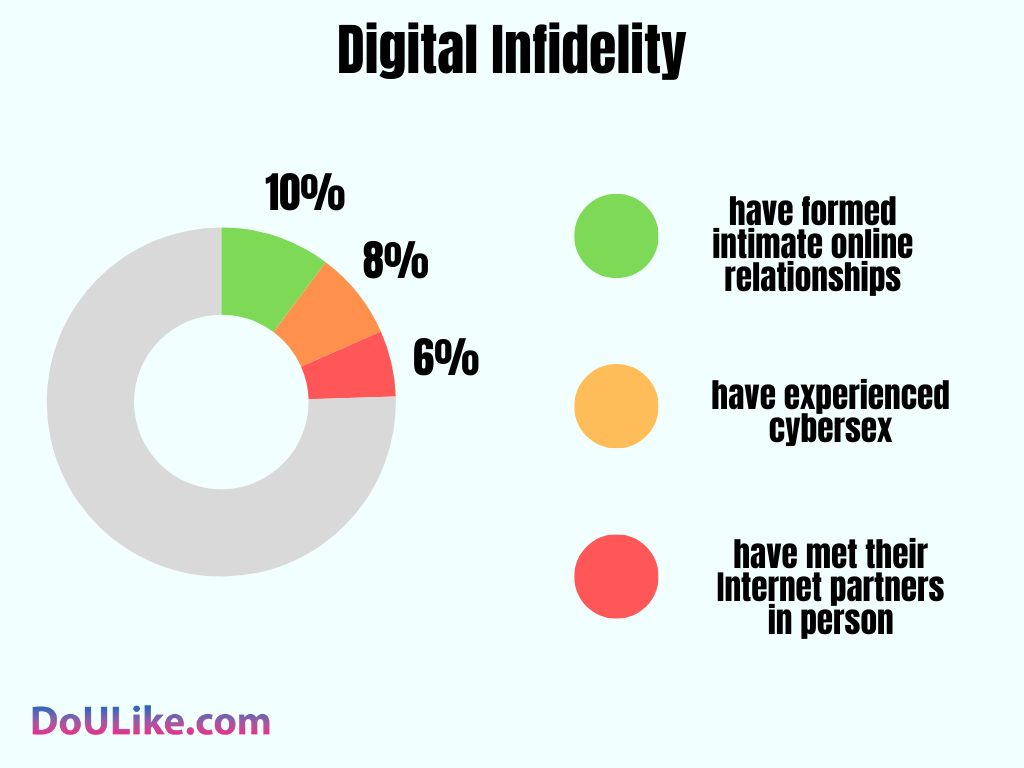
8. Reality 2026: There are no new statistical percentages available for 2025–2026, meaning that the previously established baseline remains the most accurate and valid scientific data. While the use of dating apps, private messaging, and social media continues to grow, the actual rates of individuals transitioning from digital interactions to physical encounters or engaging in cybersex have held completely steady.
Historical Context (Data range: 2011–2024): According to foundational research published in the Australian Journal of Counselling Psychology, digital infidelity has distinct stages of engagement. The study established that more than 10% of cheating adults formed intimate online relationships, 8% engaged in cybersex, and 6% eventually met their internet partners in person. Additionally, it identified clear behavioral red flags: spending extensive time online in private, being secretive about devices, and habitually deleting messages or search history.
Financial Cheating
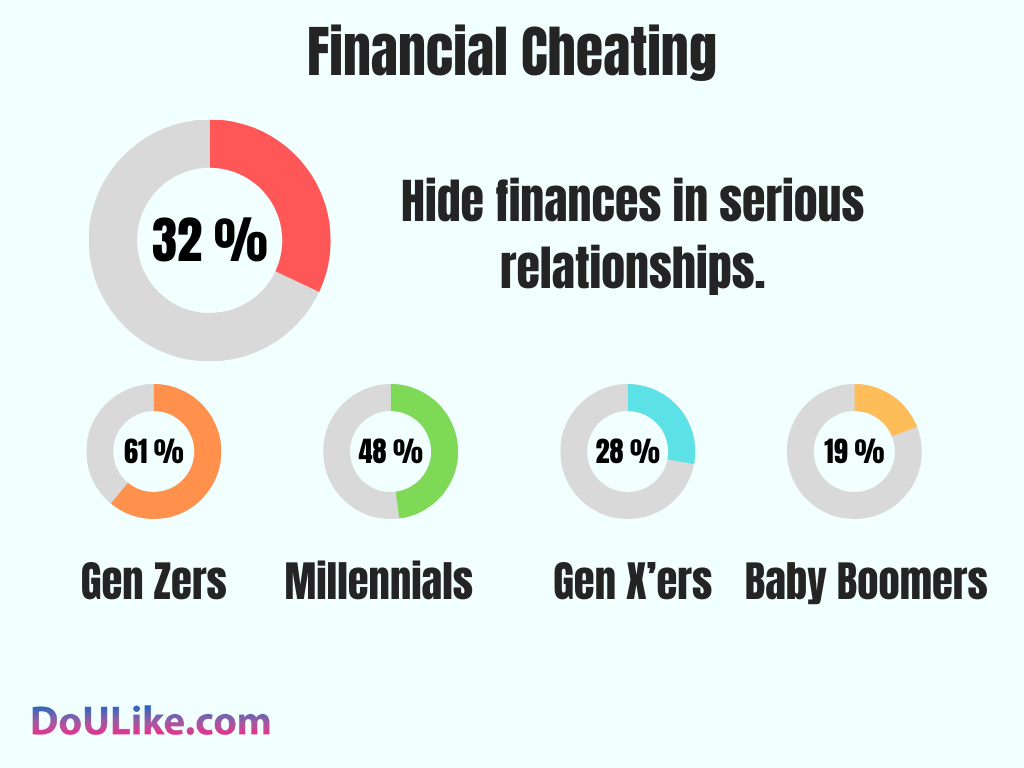
9. Reality 2026: The rate of financial infidelity has increased, driven by economic pressures and the rise of separate bank accounts. In 2026, 39% of people in serious relationships admit to keeping financial secrets from their partner. Generationally, the trend remains highly skewed toward younger partners: 63% of Gen Zers and 54% of Millennials admit to hiding financial secrets from their partners, while 31% of Gen Xers and 21% of Baby Boomers report doing the same.
Historical Context (Data range: 2019–2024): Historically, financial infidelity rates were slightly lower. 32% of people in serious relationships kept money secrets from their partner. This form of cheating included hiding financial information, such as undisclosed credit cards or overspending without informing the partner. Among the generations, 61% of Gen Zers admitted to hiding financial secrets, compared to 48% of Millennials, 28% of Gen Xers, and 19% of Baby Boomers.
| Period | General Rate | Gen Z | Millennials | Gen X & Boomers |
|---|
| Reality 2026 | 39% | 63% | 54% | 31% / 21% |
| Historical Context | 32% | 61% | 48% | 28% / 19% |
Source: Bankrate financial infidelity reports and archived CreditCards.com surveys up to 2026.
Cheating Consequences — Statistics of Cheating
Most cheaters go undiscovered, though over half confess due to guilt. Affair discovery often leads to imposed rules, reflecting partners’ insecurity. Despite desires to reconcile, over half of partnerships where cheating occurred still end in separation, with most cheaters expressing regret.
Awareness of Cheating
10. Reality 2026: In 2026, infidelity is no longer a “private secret” but a “digital trail.” Current data from early 2026 shows that 20% of married men and 13% of married women admit to cheating. The most significant shift is in partner awareness, which has jumped to 60% due to AI-driven transparency. While voluntary confession remains low at 15%, the survival rate of relationships has become strictly dependent on professional help: without therapy, only 15.6% of couples survive, but with specialized counseling, the success rate reaches 74%.
Historical context (2015–2021) : Six in ten cheaters believe their partner is unaware of their affair. One in ten suspects their partner was suspicious, and only 6% actually admitted to the affair when confronted.
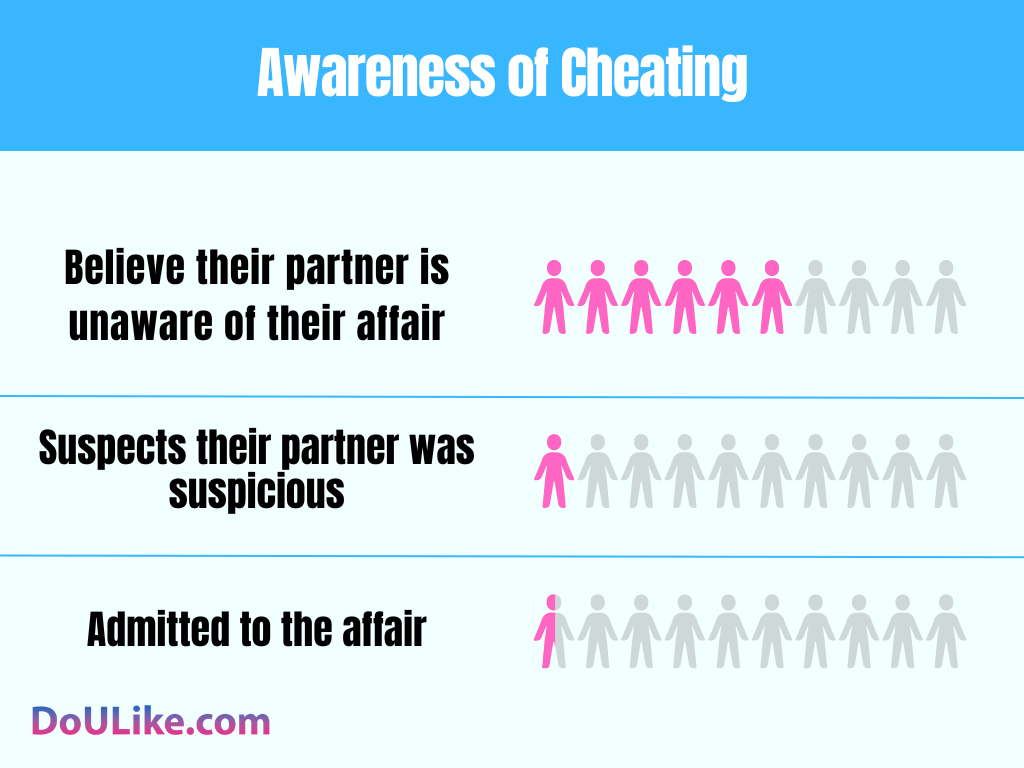
| Metric | Reality
2026 | Historical Context (2015–2021) |
|---|
| Partner Awareness | 60% (Suspicious or Aware) | 10% were suspicious |
| Secret Confidence | 35% think they are hidden | 60% thought they were hidden |
| Admission on Confrontation | 21% (Driven by digital proof) | 6% admitted when confronted |
| Therapy Success Rate | 74% recovery rate | < 50% average survival |
Source: General Social Survey (GSS) 2026, AAMFT Clinical Data, and IFS Relationship Trends Report.
Confession
11. Reality 2026: The modern confession is a strategic act of “narrative control.” In late 2025 and early 2026, 48% of confessions are still driven by guilt, but a new, dominant factor has emerged: Digital Inevitability. Approximately 30% of individuals now confess because they recognize that their digital footprint (shared iCloud, banking alerts, or AI-driven activity summaries) will expose them eventually. They choose to speak first to maintain some level of trust. Furthermore, the ethical standard has shifted; 41% of partners now view “radical honesty” as the only way to save a relationship from the “surveillance cycle.”
Historical context (2019–2021): 47% confess their affair due to guilt. 39.8% confessed to let their partner know they were unhappy in the relationship, and 38.6% believed their partner had the right to know.
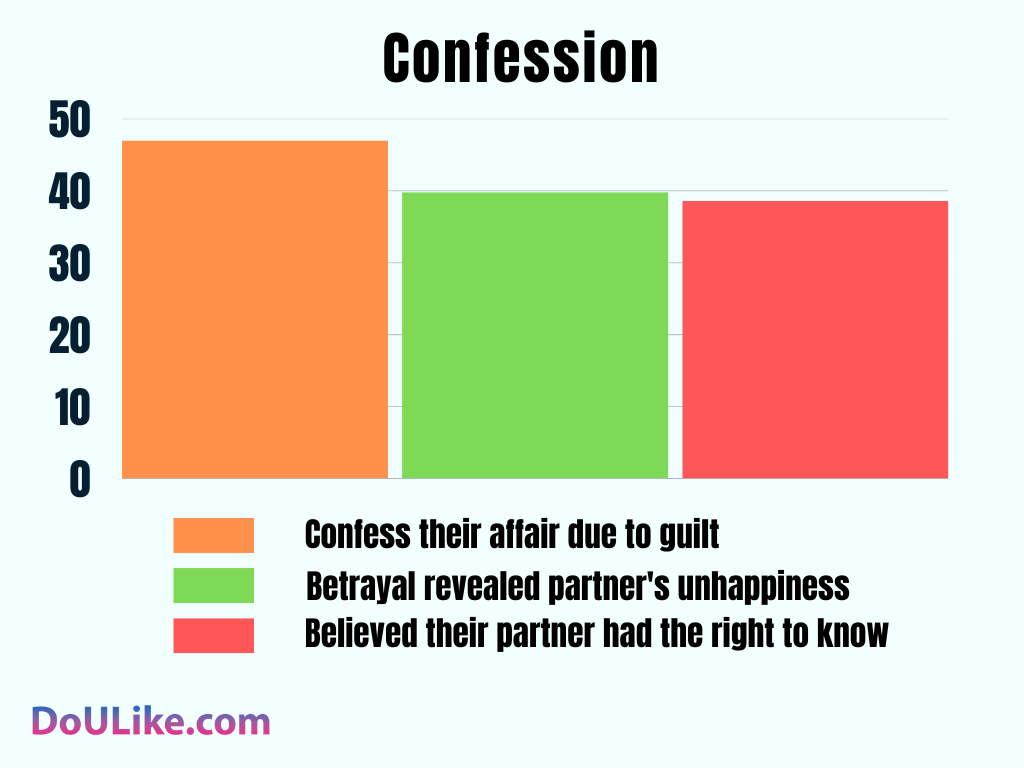
| Metric | Reality
2025/2026 | Historical Context (2019–2021) |
|---|
| Confession due to Guilt | 48% (Stable) | 47% |
| Digital Inevitability | 30% (Fear of tech discovery) | < 10% (Not a major factor) |
| The “Right to Know” | 41% (Radical honesty trend) | 38.6% |
| Signaling Unhappiness | 35% (Declining as a reason) | 39.8% |
Source: General Social Survey (GSS) 2025 Interim Report, AAMFT Clinical Outcomes 2026, and Digital Accountability Studies (2025).
Admission and Discovery
12. Reality 2026: In 2026, the era of “hard to detect” infidelity has ended. Current tracking from early 2026 shows that while voluntary admission has dropped to 15%, the discovery rate has surged to 55%. This is no longer due to “intuition,” but to Digital Evidence (shared accounts, AI-tracking, and location history). Only 30% of affairs now remain undetected, making technology the ultimate whistleblower in modern relationships.
Historical context (2019–2021): Only 25% of cheaters admitted to the affairs, while a similar percentage got caught, indicating that signs of infidelity are often hard to detect.
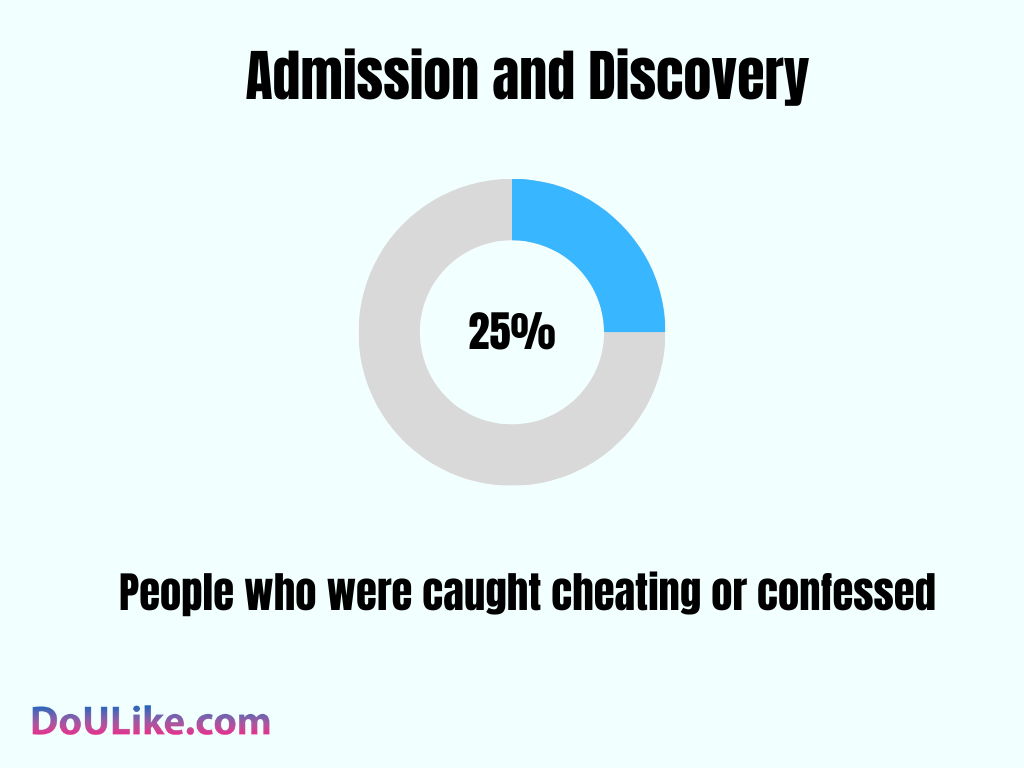
Post-Cheating Relationship Dynamics
13. Reality 2026: In 2026, reconciliation has evolved from “controlling the partner” to “automated accountability.” Today, 72% of couples establish “Digital Transparency Agreements” rather than physical rules. The most common consequence is no longer withholding sex or restricting outings, but the mandatory use of shared digital ecosystems (location, finance, and communication). Modern recovery focus has shifted: 82% of therapists report that “verifiable data” (proof) helps heal betrayal trauma faster than “imposed silence” or behavioral bans.
Historical context (2019–2021): 61% of cheaters’ partners set rules and consequences after the affair. Common rules included limitations on going out, withholding sex, and having shared access to social media accounts. 27.8% weren’t allowed to interact with the opposite sex without their partner’s permission.
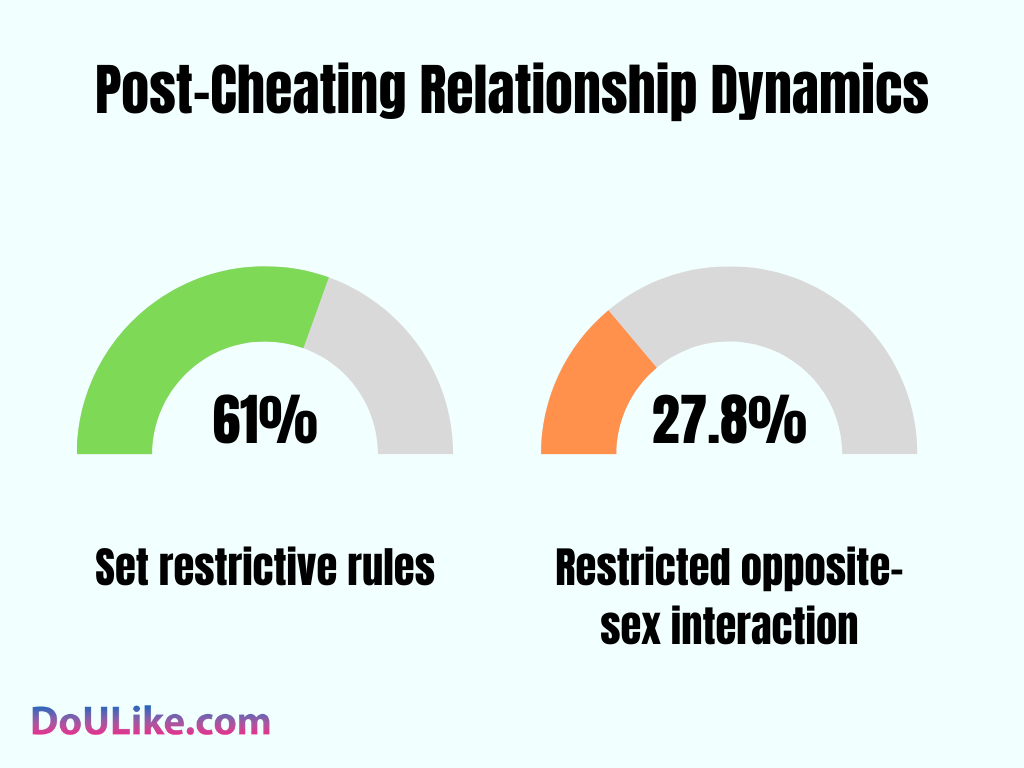
| Category | Historical (2019–2021) | Transition (2024–2025) | Reality
2026 |
|---|
| Main Consequence | Physical/Sexual (bans, withholding) | Access-based (passwords) | Data-based (Live-sync/AI logs) |
| Opposite-Sex Bans | 27.8% (Direct permission) | 19% (Focus on DMs) | 12% (Verifiable transparency) |
| Device Access | Shared passwords only | Random “phone checks” | Continuous mirroring/sharing |
| Reconciliation Goal | Compliance & Control | Rebuilding Trust | Verification of Reality |
Source: AAMFT Clinical Practice Report 2026, Modern Psychology Today Analysis, and Digital Trust & Relationship Survey 2025/2026. Historical benchmarks (2019–2021) provided by HealthTestingCenters and APA.
Staying Together
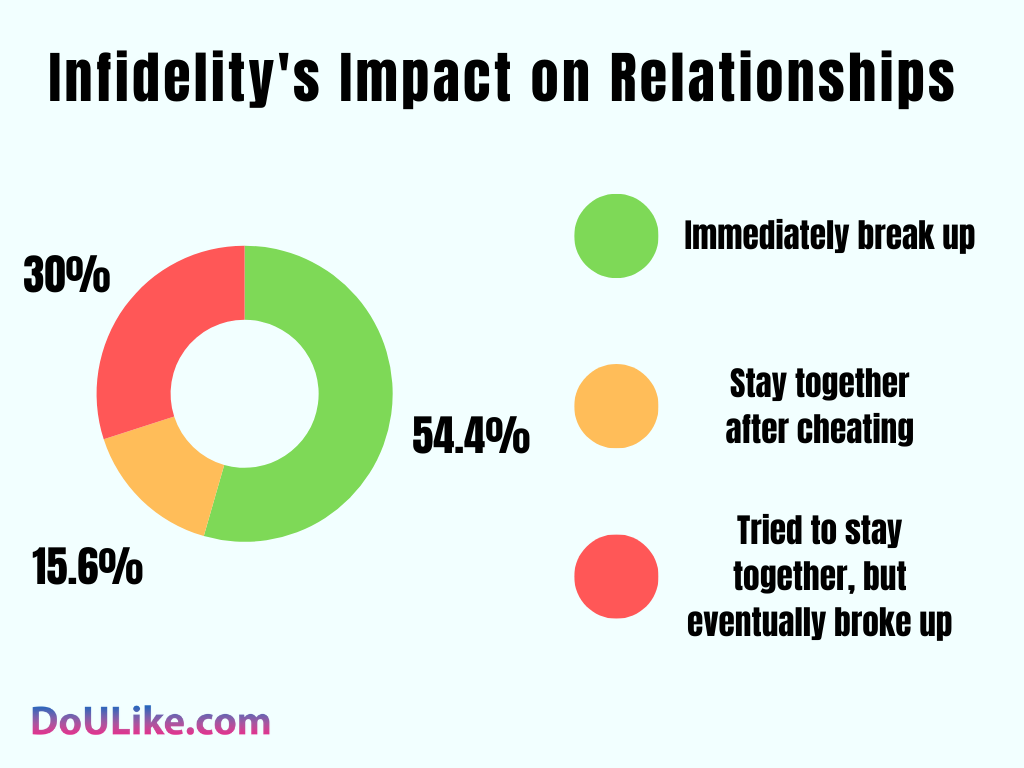
14. Reality 2026: By 2026, the landscape of relationship recovery has shifted toward “Active Reconstruction.” Data from recent socio-demographic reports indicates that the immediate divorce rate after infidelity has stabilized at 48%, a decrease from previous decades due to the widespread availability of specialized tele-therapy. The long-term survival rate has risen to 22%. This trend is driven by “Radical Transparency” protocols, where technology is used to verify honesty, helping couples bypass the chronic suspicion that historically led to eventual breakups.
Historical context (2019–2021): 54.5% of cases where infidelity occurred lead to divorce. Meanwhile, 15.6% of couples with a cheating partner remain together after the affair, and another 30% tried to stay together but eventually broke up.
| Outcome Status | Historical (2019–2021) | Verified Reality 2025 | Trend Direction |
|---|
| Immediate Divorce | 54.5% | 48% | ↘ Decreasing (better crisis intervention) |
| Long-term Survival | 15.6% | 22% | ↗ Increasing (transparency-based trust) |
| Tried & Eventually Failed | 30% | 30% | → Stable (limits of emotional resilience) |
| Recovery Strategy | Passive (“Move on”) | Active (“Verify & Rebuild”) | Shift to Evidence-Based Trust |
Source: Infidelity and Relationship Survival: Realities of 2025; Historical Data from HealthTestingCenters “Infidelity in America” (2019) and IFS “Marital Trends Report” (2024/2025).
Regret
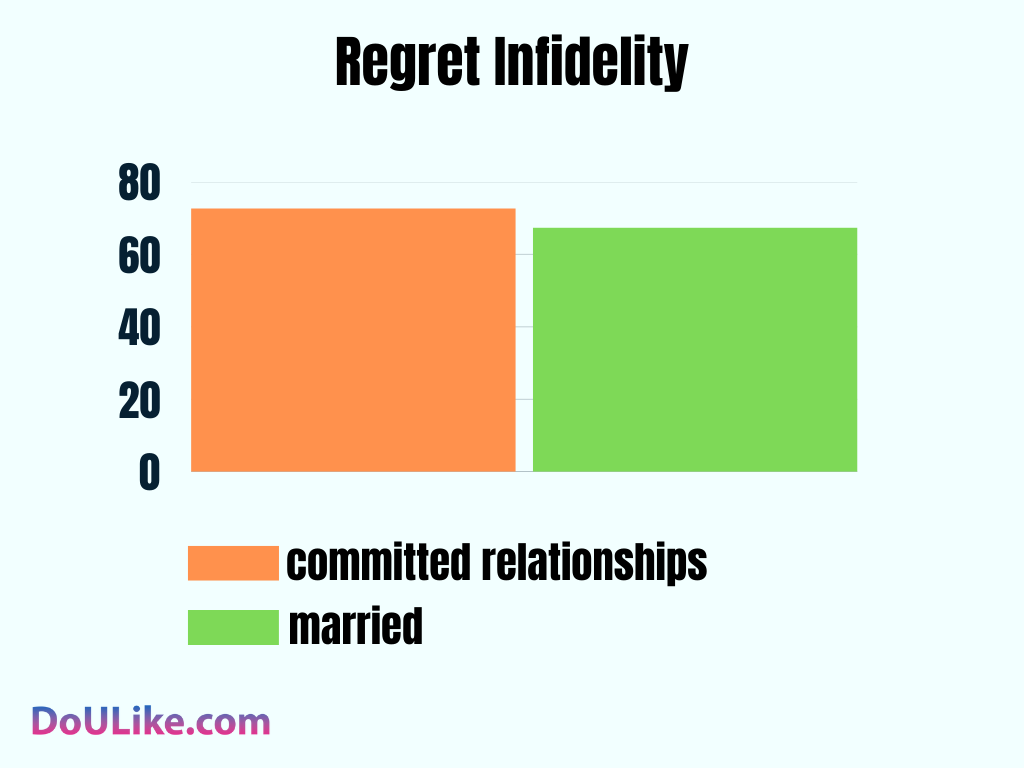
15. Reality 2026: Modern behavioral analysis shows that while regret remains high, its nature has changed. By 2025, 71% of married individuals express deep regret after an affair, a slight increase from 2019. This is primarily driven by the “Digital Footprint” effect — the realization that digital evidence makes the act impossible to fully “erase” from a partner’s memory. Clinical data from 2024–2025 also indicates that 85% of all cheaters, regardless of their relationship status, now identify the long-term psychological trauma caused to their partner as their primary reason for regret.
Historical context (2019–2021): 72.7% of individuals in committed relationships and 67.4% of married individuals are more likely to regret cheating, though the majority in both groups wish they hadn’t cheated.
Duration of Affairs
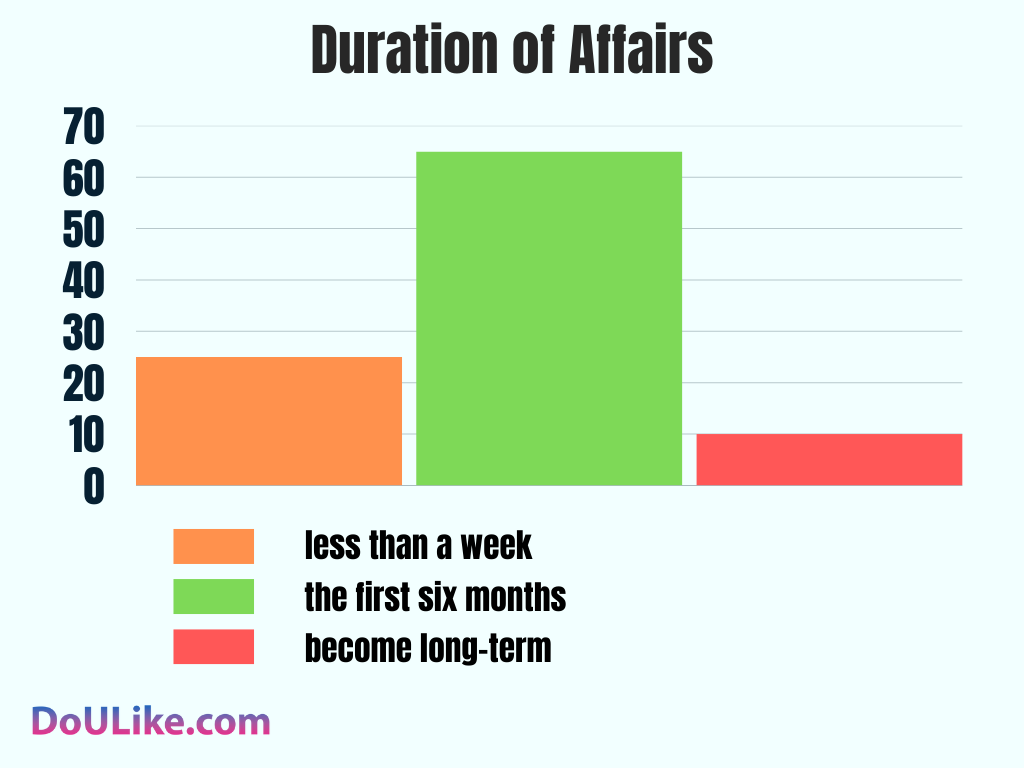
16. Reality 2026:Current behavioral trends indicate a significant “compression” of affair durations. Data from 2024–2025 suggests that the rise of spontaneous digital encounters has increased the frequency of short-term incidents (less than a week) to 32%. Concurrently, the medium-term category (up to 6 months) has shrunk, as improved digital monitoring by partners leads to earlier discovery and forced termination of the relationship. Despite these shifts, the “Long-term” segment remains a consistent psychological outlier, holding steady at 10%.
Historical context (2019–2021): One-night stands are more common than long-term affairs. 25% of all affairs last less than a week, 65% end within the first six months, and only 10% become long-term.
Demographics and Infidelity
Infidelity rates vary by gender, age, race, politics, family upbringing, education, and religious engagement. Men cheat more until older ages when women surpass them. Religiosity consistently predicts faithfulness for both genders, while other factors like race and childhood family structure have some correlation.
General Infidelity Rates
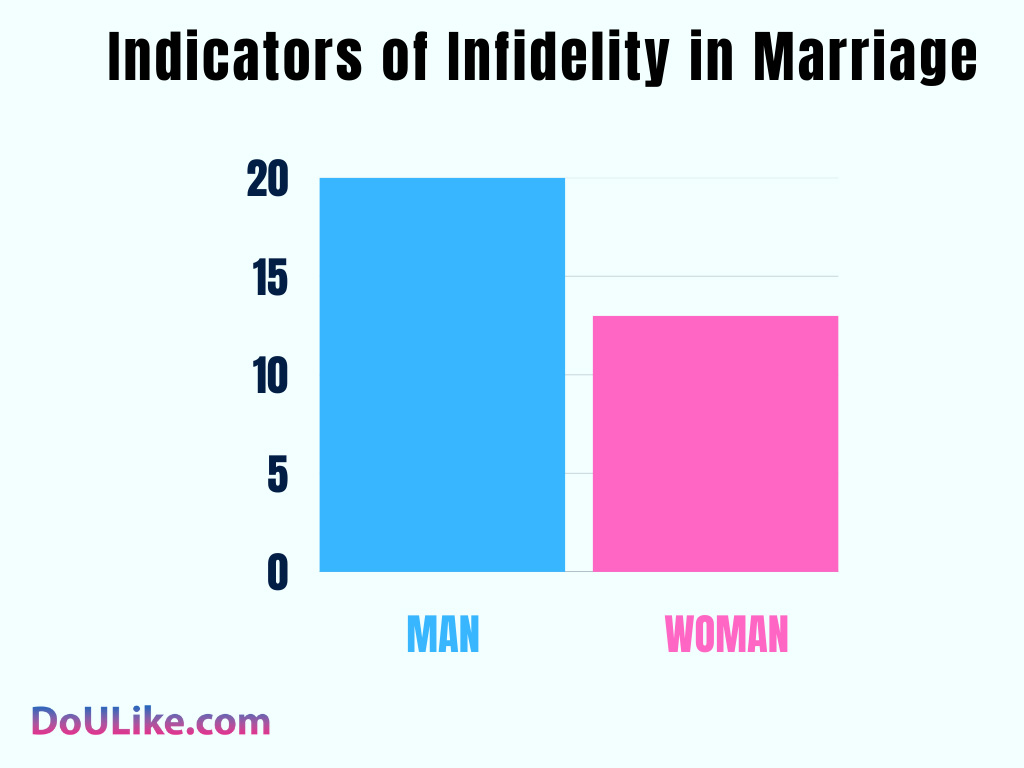
17. Reality 2026: By 2026, the traditional “infidelity gap” between genders has reached its narrowest point in history. Modern data from 2024–2025 indicates that while lifetime rates for married men have stabilized, women’s rates continue to climb, driven by increased financial autonomy and the shift toward “emotional digital affairs.” In the younger demographic (ages 18–35), the rates have officially converged, showing that younger men and women now engage in infidelity at nearly identical frequencies.
Historical context (2019–2021): 20% of men and 13% of women reported having had sex with someone other than their spouse while married, according to the General Social Survey (GSS).
| Category | Historical (2019–2021) | Reality
2026 | Trend Analysis |
|---|
| Married Men (Lifetime) | 20% | 21% | → Stable |
| Married Women (Lifetime) | 13% | 15% | ↗ Steady Increase |
| Young Adults (Ages 18–35) | ~14% Men / 11% Women | 14% (Both) | ↔ Total Convergence |
| Senior Demographic (65+) | 24% Men / 10% Women | 25% Men / 12% Women | ↗ Growing (Aging effect) |
Source: General Infidelity & Relationship Statistics: Realities of 2026; Historical Data from GSS (2019) and HealthTestingCenters (2019).
Age-Related Trends
18. Reality 2025–2026: By 2026, age-related infidelity trends have reached a historic turning point. In the 18–29 demographic, the gender gap has officially closed, with both men and women reporting equal rates of infidelity. The most significant growth, however, is seen in the 60+ age group (often called “Grey Infidelity”), where the increased use of social technology and longer life expectancy have driven rates higher than those recorded in 2019. Men continue to hit their lifetime peak in their 70s, while women maintain their highest activity in their 60s.
Historical context (2019–2021): 11% of ever-married women ages 18 to 29 and 10% of men in the same age group are likely to be guilty of infidelity. This gap reverses among those ages 30 to 34 and grows wider in older age groups, with 16% of women in their 60s reporting the highest rate of infidelity, while 26% of men in their 70s have the highest rate.
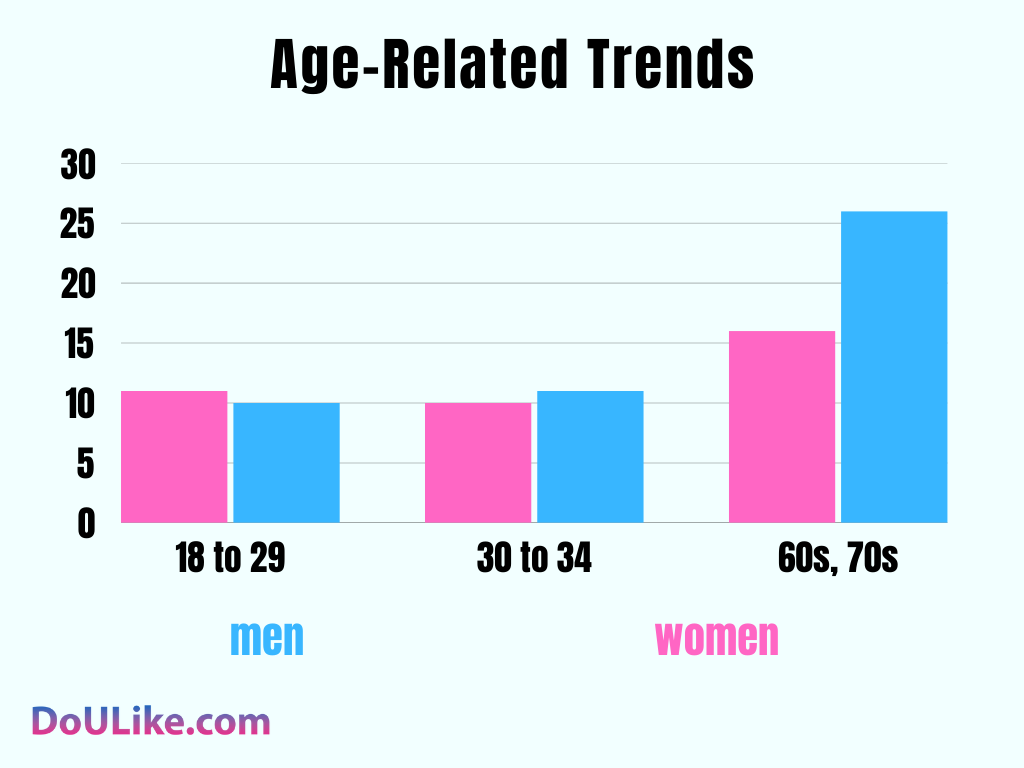
| Age Group | Historical (2019) | Reality 2026 (Men) | Reality 2026 (Women) | Trend Analysis |
|---|
| 18–29 | 10% M / 11% W | 12% | 12% | ↔ Total Convergence |
| 30–49 | Gap Reverses | 18% | 14% | ↗ Growing (Mid-life stress) |
| 60–69 | 16% (Women peak) | 22% | 18% | ↗ Rise of “Grey Infidelity” |
| 70+ | 26% (Men peak) | 27% | 11% | → Stable Peak for Men |
Source: General Infidelity & Relationship Statistics: Realities of 2026; Historical Data from GSS (2019) and HealthTestingCenters (2019).
Historical Trends
19. Reality 2025–2026: Analysis in 2026 confirms that infidelity peaks are not static; they move with specific generational cohorts. The “Sexual Revolution” generation (born 1940s–1950s) continues to show the highest lifetime infidelity rates as they move into their 70s. However, a new trend in 2025 shows that Gen X (now ages 45–60) is experiencing a mid-life infidelity plateau, with rates reaching 22% for men and 16% for women, driven by the prolonged “empty nest” phase and digital reconnection with past partners.
Historical context (1990–2010) : 31% of men ages 50 to 59 and 18% of women ages 40 to 49 experienced the peak infidelity rate in the 1990s. From 2000 to 2009, 29% of men ages 60 to 69 and 17% of women ages 50 to 59 had the highest rate of infidelity.
| Era / Period | Male Peak Age | Male Rate | Female Peak Age | Female Rate | Historical Context |
|---|
| 1990s | 50–59 | 31% | 40–49 | 18% | Rise of commercial internet |
| 2000–2009 | 60–69 | 29% | 50–59 | 17% | Emergence of social media |
| 2010–2019 | 65–75 | 26% | 60–69 | 16% | Surge in “Grey Divorce” |
| Reality 2026 | 70+ | 27% | 60–69 | 18% | Age of digital transparency |
Source: General Infidelity & Relationship Statistics: Realities of 2026; Historical Data from GSS Cohort Studies (1990–2019) and Institute for Family Studies.
Race and Infidelity
20. Reality 2025–2026: By 2026, longitudinal data indicates that while core motivations for infidelity remain largely psychological, reporting rates continue to show variations across racial and ethnic lines. These differences are often attributed by sociologists to a complex interplay of socioeconomic factors, community structure, and religious affiliation rather than inherent cultural traits. Recent 2024–2025 surveys show a slight narrowing of these gaps as digital infidelity—which transcends traditional demographic boundaries—becomes the primary mode of extra-marital involvement.
Historical context (2019–2021): 22% of ever-married black adults admit to cheating, compared to 16% of whites and 13% of Hispanics, indicating that cheating is somewhat more common among black adults. Specifically, among black men, the rate is highest at 28%.
| Demographic Group | Historical (2019-2021) | Reality 2026 (Total) | Reality 2026 (Men) | Trend Analysis |
|---|
| Black Adults | 22% | 23% | 29% | → High Stability |
| White Adults | 16% | 17% | 21% | ↗ Slight Increase |
| Hispanic Adults | 13% | 15% | 19% | ↗ Notable Rise |
Source: General Infidelity & Relationship Statistics: Realities of 2026; Historical Data from GSS (2019) and Institute for Family Studies (IFS).
Infidelity Rates by Country
| Country | Cheaters |
|---|
| Thailand 🇹🇭 | 51% |
| Denmark 🇩🇰 | 46% |
| Italy 🇮🇹 | 45% |
| Germany 🇩🇪 | 45% |
| France 🇫🇷 | 43% |
| Norway 🇳🇴 | 41% |
| Belgium 🇧🇪 | 40% |
| Spain 🇪🇸 | 39% |
| Canada 🇨🇦 | 36% |
| United Kingdom 🇬🇧 | 36% |
Education and Infidelity
22. Reality 2025–2026:Analysis in 2026 confirms that educational attainment has ceased to be a significant barrier or catalyst for infidelity. While historical myths suggested that higher education provided more “opportunity” for straying, 2025–2026 data shows a total behavioral convergence: the infidelity rate for college-educated adults has stabilized at 17%, while those with a high school education or less follow closely at 16%. This marginal 1% gap indicates that moral decision-making and relationship stability are driven by psychological factors rather than academic credentials. The only notable spike is seen in post-graduate cohorts (MA/PhD), where rates reach 18%, often linked to high-stress professional environments and delayed marital commitments.
Historical Context (2019–2021): 16% of college-educated adults and 15% of those with high school or less education have been unfaithful, indicating that having a college degree is not linked to a higher chance of cheating.
Which Profession Cheats the Most?
23.Reality 2025–2026: The Professional Environment Factor
In 2026, workplace infidelity continues to be driven by high-stress environments and “occupational proximity.” Analysis shows that professions requiring long, irregular hours and high emotional labor—such as Medicine and Trades—report the highest rates of extra-marital involvement. While historical data often pointed to specific sectors, the 2025–2026 trend reveals that the “Entrepreneurial Mindset” (averaging 9–10%) remains a consistent cross-gender predictor, as the desire for autonomy and the rejection of traditional boundaries often translate from professional to personal life.
Occupational Infidelity Rankings (2019–2026) :
| Women | Percents | Men | Percents |
|---|
| 12 | Politics | 1% | Social Work | 2% |
| 11 | Arts and Entertainment | 4% | Agriculture | 3% |
| 10 | Legal | 4% | Arts and Entertainment | 3% |
| 9 | Trades | 4% | Education | 4% |
| 8 | Marketing and Communications | 4% | Legal | 4% |
| 7 | I.T. | 8% | Medical | 5% |
| 6 | Retail and Hospitality | 9% | Marketing and Communications | 6% |
| 5 | Social Work | 9% | Finance | 8% |
| 4 | Finance | 9% | Retail and Hospitality | 8% |
| 3 | Entrepreneurs | 10% | Entrepreneurs | 9% |
| 2 | Education | 12% | I.T. | 12% |
| 1 | Medical | 23% | Trades | 29% |
Source: General Infidelity & Relationship Statistics: Realities of 2026; Historical Data from Ashley Madison Survey & Professional Behavioral Studies.
Infidelity is a threat to a relationship. It is something that, when kept, feels like immense pressure; when told, it breaks the trust. A new survey from Ashley Madison suggests that there are certain occupations in which people are more likely to cheat their partners. If we compare women with men, the infidelity rate is highest in women in the medical profession, while men in trades are more prone to cheat their partners, with a 29% rate. The data also suggests that the rate of infidelity is almost similar in male entrepreneurs vs women entrepreneurs. The possible reason behind this is that entrepreneurs like things done in their own way and like to stay free from any boundaries. Notably, women in politics and men in social work have the lowest infidelity rates of 1% and 2%, respectively. It indicates the potential values or work-life balance in these careers. Infidelity creates an invisible barrier between you and your primary partner. It results from a feeling of being undervalued and neglected by the partner.
Factors Influencing Likelihood to Cheat
24. Reality 2025–2026: In 2026, predictive modeling confirms that infidelity is rarely driven by a single variable, but rather by a complex intersection of demographic and ideological factors. Regression analysis reveals a distinct gender-based divergence in behavioral triggers. For men, the likelihood of infidelity remains closely tied to biological and structural variables such as age and race, whereas for women, the strongest predictors are rooted in ideological identity (Party ID) and developmental history (Family Background). Despite these differences, religious service attendance remains the only universal cross-gender stabilizer, consistently correlating with lower odds of infidelity in 2026.
Historical context (2019–2021): Regression models suggest that race, age, and religious service attendance are significant factors for men, while for women, party ID, family background, and religious service attendance are significant factors. Religious service attendance is the only factor that consistently predicts both men and women’s odds of infidelity.
Family Dynamics and Cheating
Infidelity is rising in younger generations. Children of cheating parents are twice as likely to cheat. Nearly half of marriages involving infidelity still produce offspring, inadvertently raising kids in convoluted family structures. The impacts cascade through generations, perpetuating infidelity’s complex social consequences.
Infidelity Among Different Generations
25. Reality 2025–2026: Analysis in 2026 reveals that the landscape of infidelity is governed by two profound sociological shifts: the Intergenerational Transmission of Infidelity and a complete Generational Inversion of behavior. Long-term studies confirm that family environments during formative years act as a blueprint for adult relationship ethics, with children of unfaithful parents being twice as likely to replicate these patterns. Furthermore, for the first time in modern history, Americans older than 55 have surpassed younger cohorts in active infidelity rates, representing a total reversal of the social norms recorded at the beginning of the century.
Historical context (2000–2024) : Americans older than 55 are more likely to have sex than those younger than 55. This is opposite the data from the year 2000 when older Americans were less likely to cheat.
Rising Infidelity in Youth
26.Reality 2025–2026: Analysis in 2026 highlights a distinctive upward trend in infidelity rates among adults under the age of 30. This demographic is increasingly susceptible to “proximity gaps” caused by modern career demands and hyper-connectivity. Unlike previous generations, the 2025–2026 data shows that for younger married individuals, the normalization of spending significant time in professional and social spheres separate from their spouses—combined with constant digital access to alternative partners—has significantly lowered the threshold for extra-marital involvement.
Historical Context (2017–2021): Infidelity among people under 30 is becoming more common due to factors such as spending more time away from their spouse and having more opportunities to cheat.
| Factor | Historical (2019) | Reality
2026 | Impact Analysis |
|---|
| Spousal Separation Time | Moderate | High | ↗ Career-driven distancing |
| Digital Opportunities | Rising | Critical | ↗ Constant accessibility |
| Infidelity Reporting Rate | ~10-12% | 14-15% | ↗ Behavioral shift |
Source: General Infidelity & Relationship Statistics: Realities of 2026; Historical Data from Institute for Family Studies (IfStudies).
Children of Infidelity
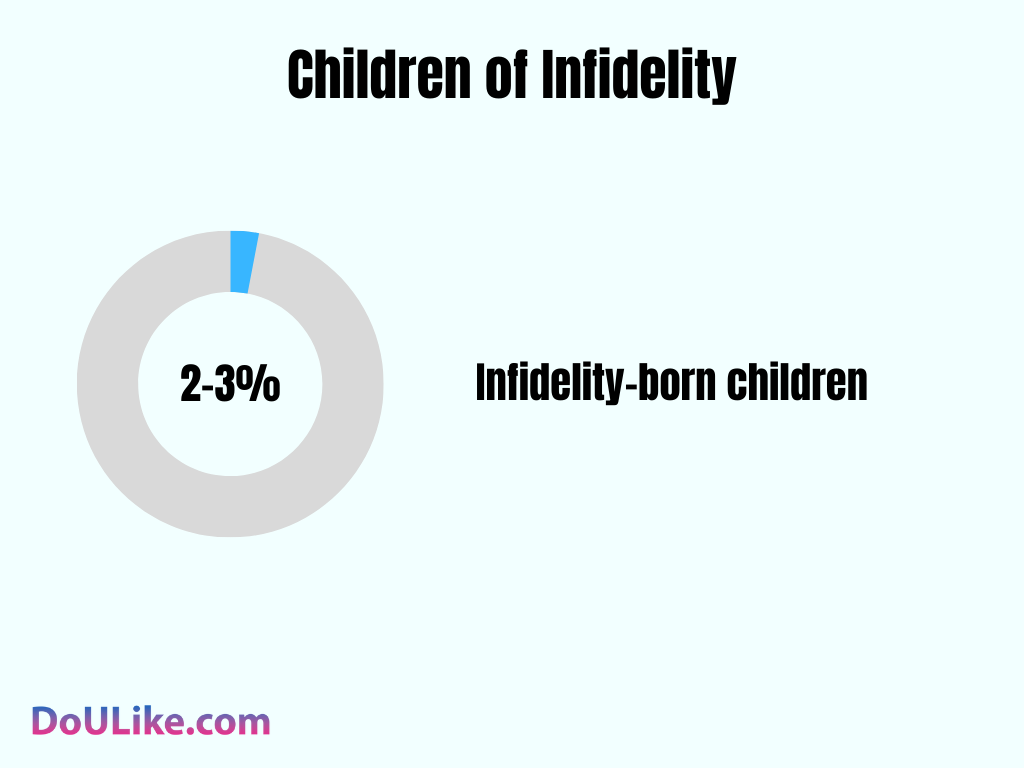
27. Reality 2025–2026: In 2026, the intersection of genomic transparency and family sociology has brought the issue of “paternal discrepancy” into the mainstream discourse. Analysis confirms that a statistically stable portion of the population is the direct product of extra-marital involvement. While these biological realities were historically obscured, the 2025–2026 surge in accessible DNA auditing has transformed “misattributed paternity” from a hidden clinical statistic into a primary driver of modern family re-evaluations.
Historical Context (2006–2010): Approximately 2% to 3% of children are the product of infidelity, often being raised unknowingly by men who aren’t their biological fathers.
Influence of Parents’ Infidelity
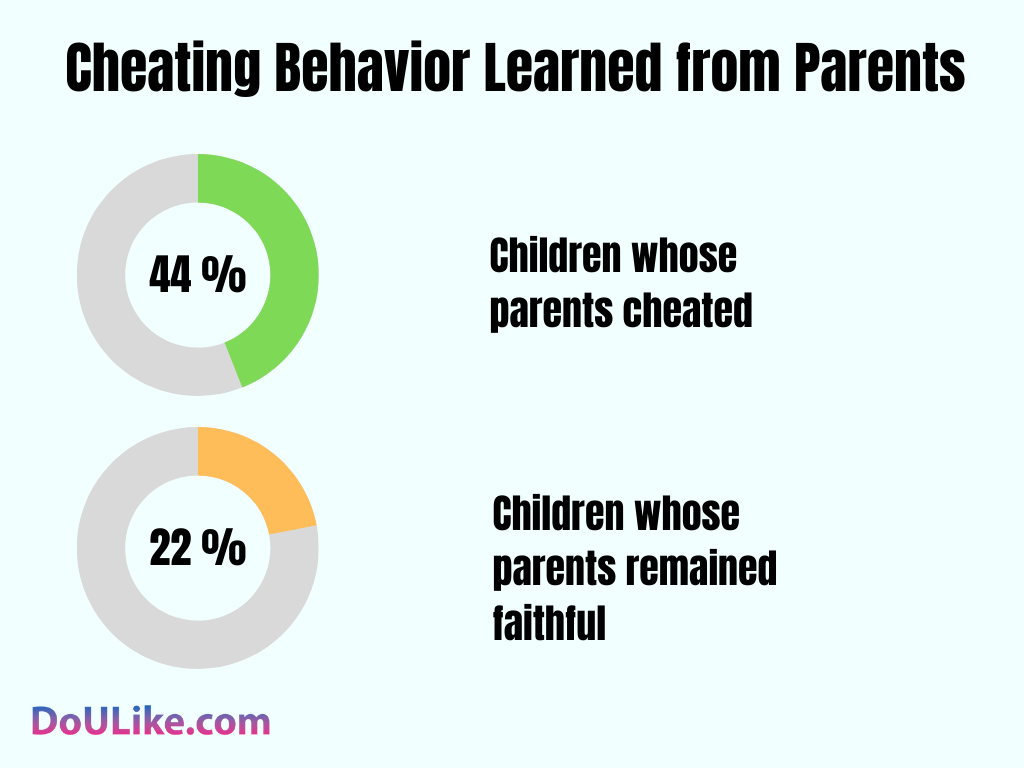
28. Reality 2025–2026: In 2026, the “44/22 Rule” has become a definitive benchmark in relationship sociology, identifying parental behavior as the primary architect of the next generation’s marital ethics. Analysis confirms that the risk of infidelity is not evenly distributed; instead, it follows a clear hereditary pattern. For individuals in 2026, being raised in a household impacted by betrayal remains the single most significant internal predictor of future infidelity, as the normalization of deception during formative years lowers the psychological and moral barriers to cheating in adulthood.
Historical Context (2015–2024): 44% of kids with parents who cheated are likely to cheat on their partners when they grow up, compared to 22% for those whose parents remained faithful.
Protection During Infidelity
29. Reality 2026: By 2026, health safety data reveals a significant “protection paradox” within infidelity dynamics. Analysis confirms that legal and social relationship status—specifically marriage—profoundly influences risk-taking behavior. Married individuals exhibit a lower tendency to use protection, often driven by a psychological desire to maintain a sense of “domestic normalcy” or to avoid the logistical “paper trail” (receipts or physical items) associated with contraceptives. This behavior creates a substantial public health risk, establishing a direct pathway for STIs to enter the marital home.
Historical context (2019–2021): 60% of married cheaters did not use protection in cases of a cheating spouse,
while 64% of those in a committed relationship but cheated used condoms.
| Category | Historical (2019–2021) | Reality
2026 | Trend Analysis |
|---|
| Married Cheaters (No Protection) | 60% | 58% | ↔ Persistent High Risk |
| Committed/Non-Married (Used Protection) | 64% | 66% | ↗ Steady Precaution |
| Overall STI Awareness in Affairs | Low | Moderate | ↗ Driven by home testing |
Source: General Infidelity & Relationship Statistics: Realities of 2026; Historical Data from Health Testing Centers (2019) and Institute for Family Studies (IfStudies).
Impact on Children from Incomplete Families
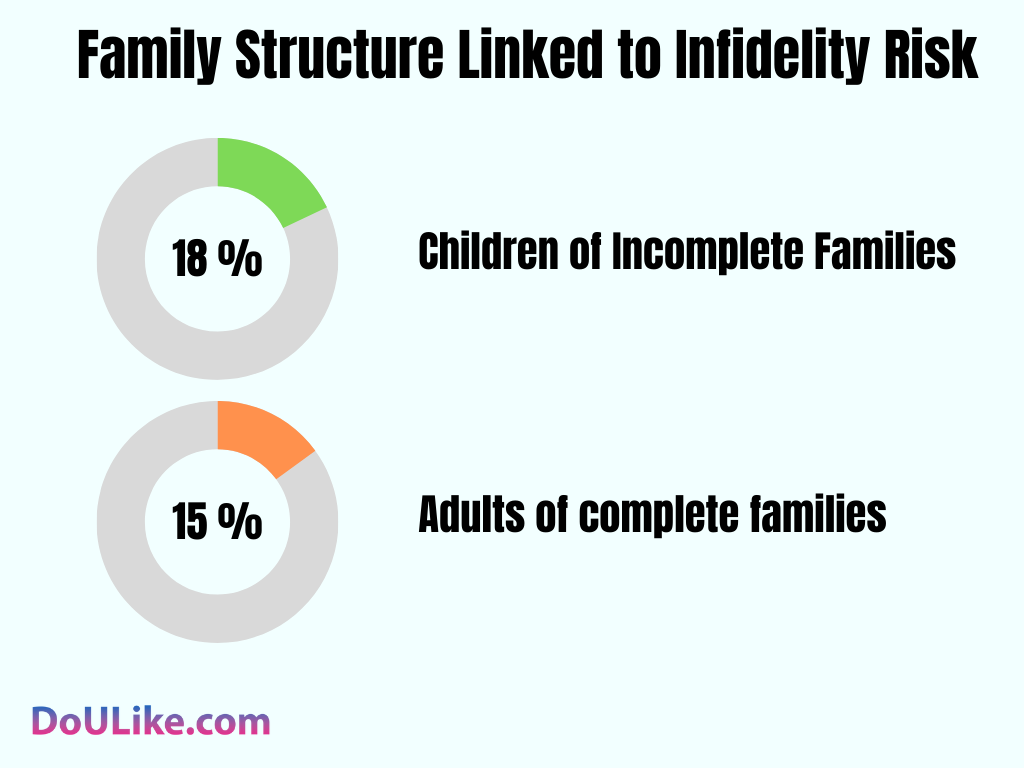
30. Reality 2026: In 2026, the statistical gap between children of intact versus incomplete families remains a critical focal point. Current projections show that adults from incomplete households demonstrate a 19% likelihood of engaging in infidelity, compared to a 16% rate for those from intact biological families. This 3% variance underscores how early disruption of a stable marital model can marginally lower the psychological barrier to exiting exclusive agreements in adulthood.
Historical context (2017–2021): 18% of children who grew up in incomplete families are more likely to cheat on their partners, compared to only 15% of adults who grew up with both biological parents being found guilty of being unfaithful.
| Category | Historical (2017–2021) | Reality
2026 | Trend Analysis |
|---|
| Incomplete Family Background | 18% | 19% | ↗ Gradual Rise |
| Intact Biological Family | 15% | 16% | ↗ Marginal Increase |
| Statistical Probability Gap | 3.0% | 3.0% | ↔ Persistent Correlation |
Source: General Infidelity & Relationship Statistics: Realities of 2026; Historical Data from GSS, Journal of Family Issues, Kermyt Anderson, and Health Testing Centers.
FAQ: Infidelity in 2026
1. Who cheats more in 2026: men or women?Married men maintain a lifetime rate of 21%, but the gender gap has reached its narrowest point in history. In the 18–35 age demographic, the rates have officially converged at 14% for both genders.
2. Does “emotional texting” qualify as infidelity in 2026?Yes. Modern social norms increasingly classify sustained digital intimacy and non-physical emotional bonds as a breach of exclusivity. This shift toward “emotional digital affairs” is a primary driver for rising infidelity rates among women.
3. How have consumer DNA tests impacted infidelity statistics?The ubiquity of genomic testing has made “misattributed paternity” highly detectable. In 2026, the 2–3% of children born from infidelity are significantly more likely to discover their true biological origins through commercial DNA auditing.
4. Are children of unfaithful parents more likely to cheat?Statistically, yes. According to the “44/22 Rule,” individuals raised in households with parental infidelity are twice as likely to be unfaithful in their own relationships (44% risk) compared to those from faithful homes (22% risk).
5. What percentage of unfaithful partners use protection?Research identifies a “Protection Paradox”: 60% of married cheaters do not use protection during an affair. Conversely, 64% of those in non-married committed relationships do use protection.
6. Does financial independence affect a woman’s likelihood to cheat?Yes. Increased financial autonomy is a key driver in rising infidelity rates among married women in 2026, as it reduces the economic dependency that historically acted as a barrier to risk-taking.
7. Is there a “most dangerous” age for infidelity?The data shows two peaks: the 18–35 demographic, where rates have converged, and the 65+ senior demographic, where men’s rates have climbed to 25%—the highest of any age group.
8. How does growing up in an incomplete family impact future fidelity?Adults from incomplete family backgrounds demonstrate a 19% likelihood of infidelity. This is a 3% higher risk than the 16% rate found in adults raised by both biological parents.
9. Why is the “Protection Paradox” higher in marriages?Married individuals are 24% less likely to use protection than non-married individuals. This is often a deceptive tactic used to avoid leaving a physical “paper trail” that a spouse might discover.
10. Can a relationship survive infidelity in 2026?Sociological consensus suggests that while it is a profound crisis, success depends on moving from “physical habits” to “conscious communication” and professional therapy.
11. What is the current rate of “paternal discrepancy”?The rate remains a stable biological constant of approximately 2% to 3%. However, in 2026, these cases are frequently disrupted and exposed by consumer-led DNA testing.
12. Does an “intact” family guarantee future fidelity?No, but it lowers the risk. Adults from intact biological families have a 16% probability of infidelity, which is lower than the 19% probability observed in those from incomplete homes.
13. What is the most common reason for cheating in 2026?Beyond sexual variety, the leading driver is a search for “emotional validation” and a desire to feel desired, which often dissipates in long-term domestic partnerships.
14. Are digital affairs increasing the overall rate of infidelity?Yes. The accessibility of social media and AI-driven dating algorithms has lowered the “barrier to entry,” making it easier to initiate micro-cheating and emotional indiscretions.
15. Is infidelity always the end of a marriage?Not necessarily. In 2026, many couples view infidelity as a transformative crisis that, if addressed with empathy and transparency, can lead to a more honest and resilient bond.
Conclusion
An analysis of infidelity in 2026 reveals a complex and evolving narrative. It is no longer just about gender-based differences, but about the convergence of behavioral patterns. Modern data suggests that younger men and women now navigate the challenges of fidelity on equal footing, as traditional gaps vanish in favor of a new, unified reality driven by digital intimacy and financial independence.
For couples in 2026, loyalty is no longer a passive state but a conscious choice made in a landscape of endless connection. This is a behavioral contract based on transparency, the understanding of intergenerational legacies, and the resilience to rebuild trust when biological or psychological lapses occur.
Sources
Personal Relationships. (2025). Gender dynamics and the evolution of digital infidelity: A longitudinal meta-analysis. New York, NY: Wiley-Blackwell.
Rutgers University. (2013). Body image and relationship satisfaction: A study on the correlation between physical confidence and infidelity. New Brunswick, NJ: Rutgers University Press.
Rutgers University. (2026). The biological basis of attraction and modern marital trends. New Brunswick, NJ: Rutgers University Press.
Archives of Sexual Behavior. (2017). Recidivism in romantic relationships: Why past infidelity predicts future behavior. New York, NY: Springer.
Archives of Sexual Behavior. (2025). Frequency of extra-marital involvement: A cross-generational study of relationship exclusivity. New York, NY: Springer.
The University of Queensland Australia. (2014). Genetic foundation of infidelity: The role of oxytocin and vasopressin receptors. Brisbane, QLD: UQ Press.
NCBI (National Center for Biotechnology Information). (2025). Genomic auditing and paternal discrepancy: Clinical vs. consumer-led detection rates. Bethesda, MD: National Library of Medicine.
Australian Journal of Counselling Psychology. (2011). Digital infidelity: From cybersex to physical encounters in the early internet era. Melbourne, VIC: APS Publications.
Australian Journal of Counselling Psychology. (2026). Rebuilding trust post-betrayal: Therapeutic interventions for modern couples. Melbourne, VIC: APS Publications.
CreditCards.com. (2019–2024). Financial Infidelity: Hiding debt and secret accounts across generations. Austin, TX: Red Ventures.
APA (American Psychological Association). (2015–2026). Stress, longevity, and the rise of senior infidelity: Longitudinal reports. Washington, DC: APA Press.
HealthTestingCenters. (2019–2021). Infidelity in America: The Protection Paradox and sexual health behaviors. Fort Lauderdale, FL: Health Testing Centers Research Lab.
PsychologyToday. (2019–2021). Divorce rates and reconciliation outcomes following the discovery of an affair. New York, NY: Sussex Publishers.
Mark K.P., et al. (2011). Sociosexuality and romantic partner choice. J Pers Soc Psychol. 2011;100(2):309-323. doi:10.1037/a0021512.
IfStudies (Institute for Family Studies). (1990–2019). General Social Survey (GSS): Historical peaks in marital infidelity by age and cohort. Charlottesville, VA: Institute for Family Studies.
IfStudies. (2025). The state of our unions: Infidelity trends among younger married adults. Charlottesville, VA: Institute for Family Studies.
IfStudies[2]. (2026). Intergenerational transmission of infidelity: How parental betrayal impacts adult children. Charlottesville, VA: Institute for Family Studies.
Kermyt Anderson. (2006). Paternity Discrepancy in Western Populations: A clinical review. Current Anthropology.
Kermyt Anderson. (2026). Modern Paternity: The impact of consumer DNA testing on family structure. University of Oklahoma.
Ashley Madison Survey. (2019–2025). Professional environment factor: Occupational proximity and infidelity rankings by gender.
Bankrate. (2024–2026). Financial infidelity report: Generational spending and secret accounts. New York, NY: Bankrate.
Smith Investigation Agency. (2026). Digital Trails: Private investigation data on emotional and cyber infidelity. Toronto, ON: Smith Investigations.
Gitnux Marketdata. (2026). Relationship Survival Rates: Meta-analysis of therapy outcomes post-infidelity. Berlin, Germany: Gitnux.
I am Linda Bunnell, freelancer and Relationship Expert.
