Badoo operates as a global dating platform with a distinct position in online matchmaking. It launched in 2006. The service runs across 190 countries and supports 47 languages, which places it among the most widely used dating networks worldwide (Wikipedia).
We think its product direction leans closer to social discovery than classic dating. Users connect through shared interests and nearby location, not just profile matching. That shift shapes how interactions start, how quickly they move, and what users expect going in. So what is Badoo app used for, exactly? For most people, it’s a mix of casual chatting, local meetups, and — for a solid majority — a genuine search for a relationship.
This article reviews current Badoo statistics. It looks at user demographics, how matches form and progress, patterns in paid subscriptions, and reported success outcomes. Data points sit side by side, some tight, some messy, giving a more grounded read of how the platform actually performs.
10 Key Badoo Statistics
- Badoo has over 460 million registered users worldwide.
- Users perform more than 12 billion Badoo swipes per day on the app.
- Over 400,000 new users sign up for Badoo every day.
- Badoo users exchange more than 350 million messages daily.
- Brazil is the top user country, with around 5.10 million users, making up over 6% of the site’s monthly traffic.
- The gender ratio on Badoo is approximately 68.86% male and 31.14% female.
- The largest age group of Badoo users falls within the 25–34 range.
- Around 72% of Badoo users are looking for serious relationships.
- Badoo’s user base spans various professions, though specific job data is limited.
- Badoo is available in 47 languages and is used in over 190 countries.
User Demographics: Who Uses Badoo?
Total Number of People Using the Application
As of 2025, Badoo boasts over 460 million registered users worldwide, with more than 400,000 new users joining daily. Signing up is quick — building out a Badoo profile typically takes just a few minutes, and both the web version and the Badoo apps for iOS and Android walk new users through the same short setup flow.
Badoo Gender Ratio
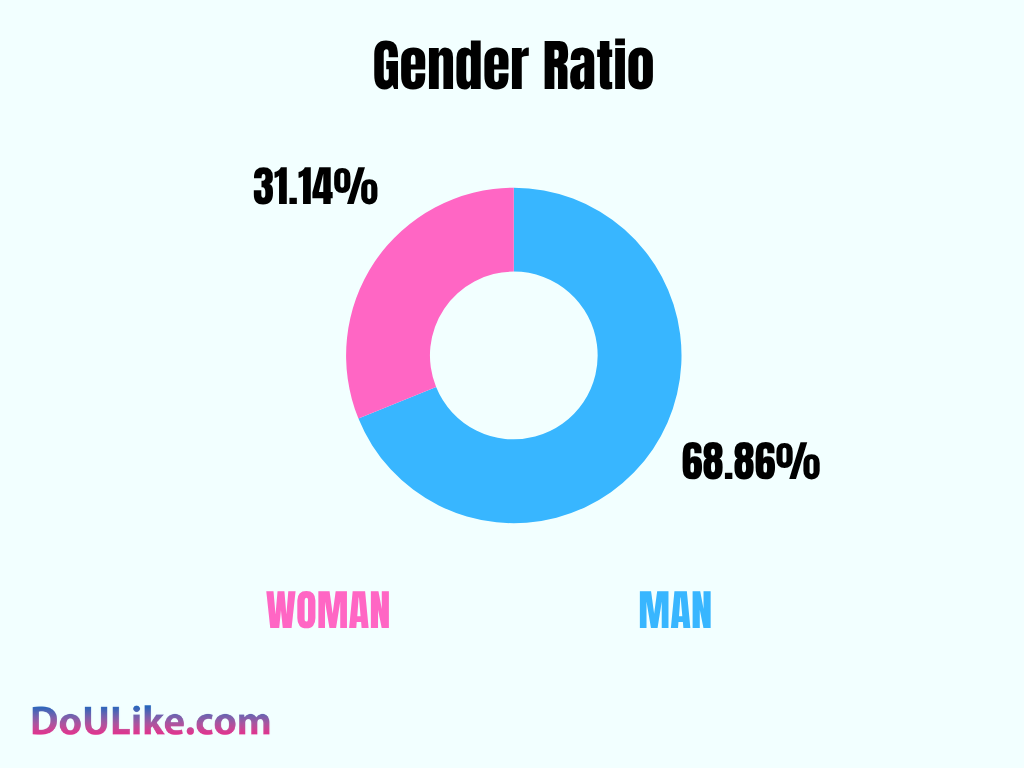
The website’s user base is predominantly male, with approximately 68.86% male and 31.14% female users (Similarweb).
Badoo Age Range
Activity concentrates in the 25–34 bracket. This group drives most engagement, younger energy, quick decisions, less hesitation (Similarweb).
Relationship Goals
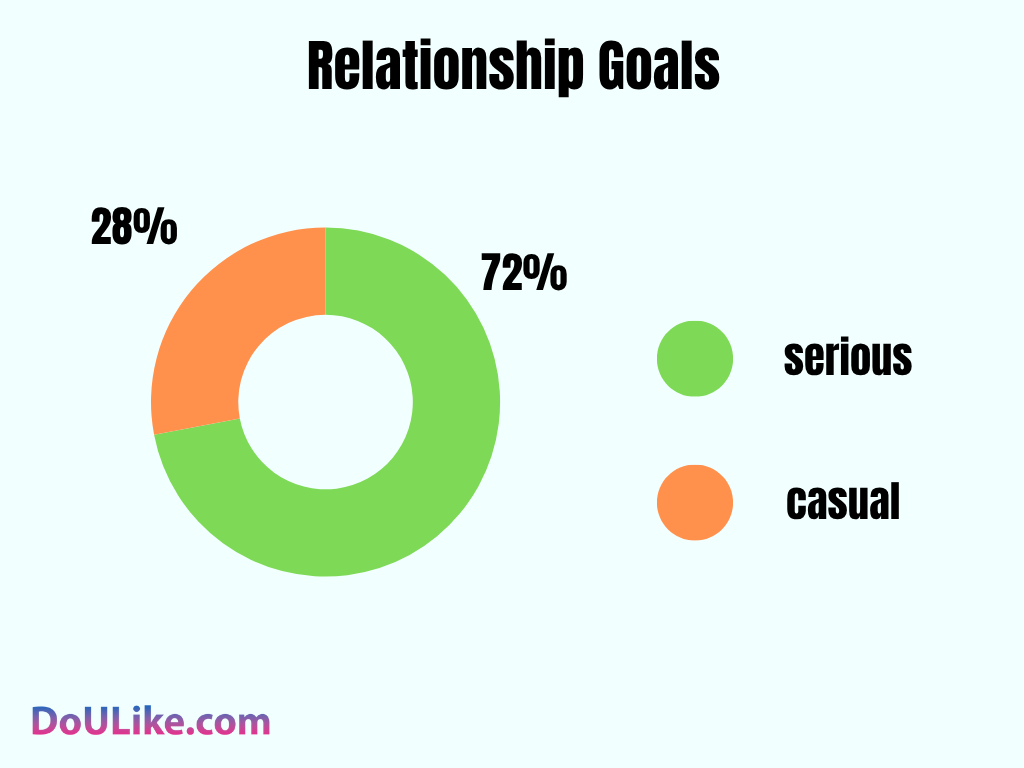

Badoo serves users with mixed intentions, though the tilt is clear. About 72% look for serious relationships. The remaining 28% pursue casual dating or new social contacts. The split stays visible across markets, even if local behavior shifts a bit.
Most Common Professions Among Users
Clear numbers on professions do not surface. Data stays thin. According to our analysts, Badoo’s global reach pulls in users across many job types, wide spread, no single group dominates.
Geographic Breakdown: Top Countries Where Badoo is Used
Badoo operates at global scale, though usage clusters unevenly. Some regions drive heavy activity, others lag — a quick look at Badoo users by country shows just how uneven that spread really is.
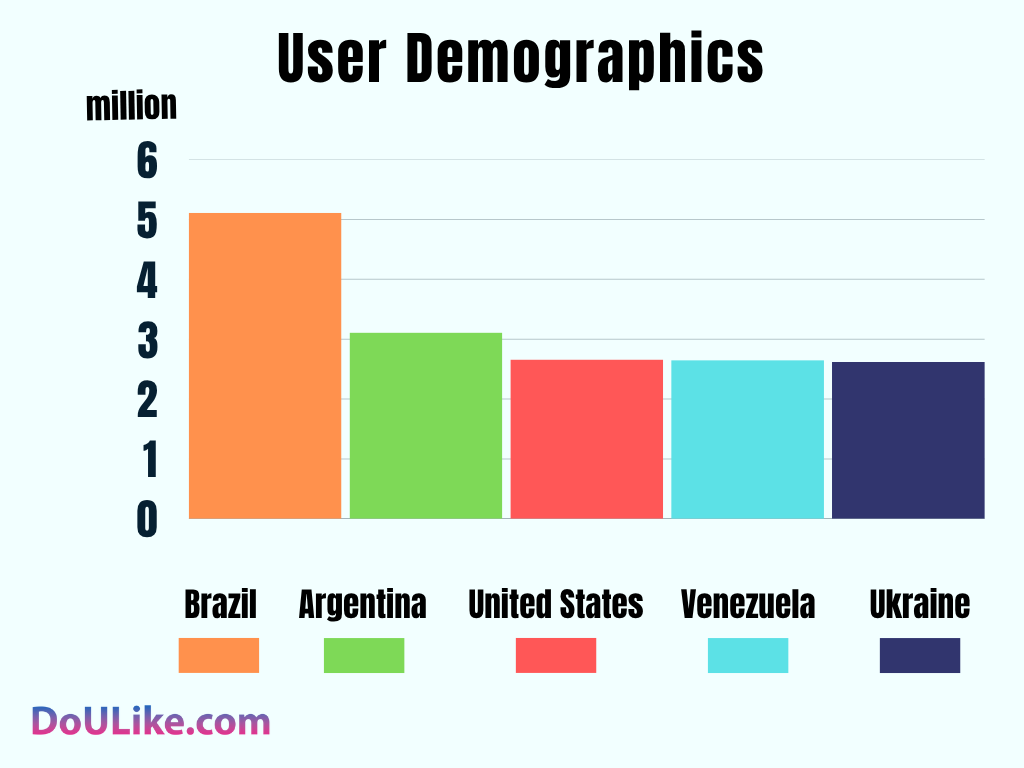
Badoo has a significant presence in several countries, with the highest user concentrations in:
- Brazil leads with about 5.10 mn users, contributing over 6% of monthly traffic. (World Population Review).
- Argentina follows at roughly 3.11 mn users (Semrush).
- The United States records near 2.66 mn users (Semrush).
- Venezuela sits close, around 2.65 mn users (Semrush).
- Ukraine comes in at about 2.62 mn (Semrush).
So where is Badoo most popular? The pattern leans hard toward Latin America, with Europe still very much in play. Traffic spreads wide, though not evenly. Some regions overperform, others just linger.
Comparison: Badoo vs. DoULike
Badoo and DoULike sit on opposite sides of the dating market. One scales reach and constant interaction. The other narrows scope, aiming for filtered matches and deliberate engagement.
These positions show up fast in product mechanics. Badoo pushes volume, high churn, rapid discovery loops. DoULike trims the funnel, focusing on compatibility checks and slower progression. Pricing logic follows the same split. One drives frequency, the other pushes intent. Different bets, honestly.
| Category |   |  |
| Founded | 2006 | 2005 |
| Active Users | 460M+ registered users~15M monthly active | 1+ million active users |
| Average Age | 25–34 (largest group) | 30–45 |
| Male-to-Female Ratio | ~69% men / 31% women | More balanced (women free, value-based matching) |
| Relationship Goals | 72% serious dating28% casual / social | Primarily serious, value-driven relationships |
| Typical Professions | Broad, global mix (no dominant profession group) | Creative Fields, Medical, Business |
| Main Matching System | Swipe-based social discovery + proximity | ValueMatch based on beliefs & life priorities |
| Mobile Apps | iOS & Android | iOS & Android |
| Top Countries | Brazil, Argentina, USA, Venezuela, Ukraine | USA, Canada, UK, Australia, Europe |
| Pricing Model | Freemium + premium boosts & visibility | Free for women; men pay only if you get a response |
| Cost | Premium subscriptions & in-app purchases (varies by region) | Star Membership: from $19.95/month |
| Best For | Users who want global reach and social discovery | Singles seeking compatibility and meaningful matches |
Subscription & Revenue Statistics
Total Number of Paying Subscribers
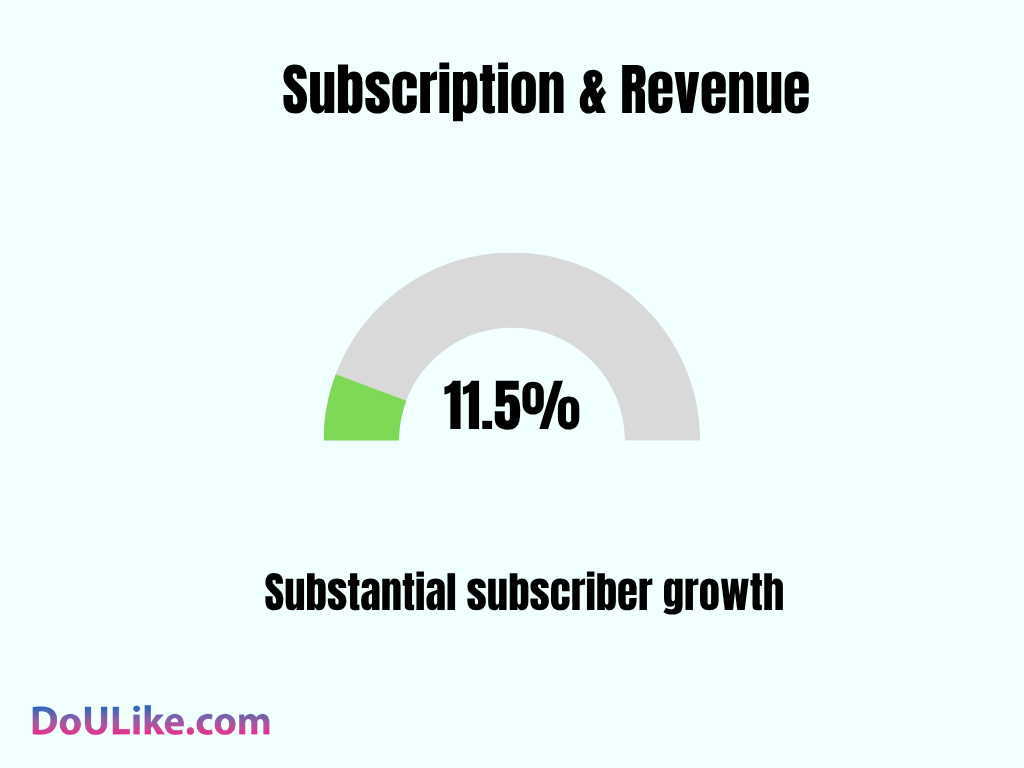
In 2024, Badoo reported 4.1 million paying subscribers, marking an 11.5% increase from the previous year.
Breakdown of Subscription Plans and Their Popularity
The product runs on a freemium setup. Users access basic functions for free, then pay for extras like profile boosts, higher visibility, and extended messaging tools. We think adoption hinges on these paid boosts; visibility sells. Communication add-ons too, maybe less obvious but sticky.
Annual Revenue and Financial Growth Trends
Badoo generated about $205 mn in revenue in 2024. Subscriptions and in-app purchases drive most of it. Growth links to its global user base and monetization across mobile platforms.
The platform also benefits from its position within the Bumble Inc. portfolio. Shared tech, cross-platform marketing, financial support. Growth continues in Latin America and Eastern Europe. That helps revenue hold.
Badoo Success Stories: The Marriage Factor
The app carries a casual label. Still, many users look for long-term outcomes and find them.
Global scale, broad features, real interaction volume. According to our analysts, that mix leads to relationships beyond short-term use. Some chats turn serious. Sometimes fast.
Conclusion
Badoo operates more as a social discovery service than a narrow dating tool. It connects users at scale, with strong activity in Latin America and Europe. The platform reports more than 530 mn registered accounts. That number reflects reach, not active usage.
Engagement matters more. According to our analysts, daily interactions remain high. That keeps the system active.
User intent varies. Some seek relationships. Others chat or pass time. The app supports this mix through swipe features, profiles, video calls, local meetups. We think this flexibility explains part of its traction. It feels loose. Messy, maybe, but usable.
Geographic distribution tells a clearer story than marketing claims. Strong clusters appear in certain regions. Behavior shifts with local habits and device use. Usage density stays uneven. Expected, honestly.
Badoo does not publish metrics tied to divorce or long-term outcomes. That gap limits claims about real-world impact. Still, internal signals such as swipe volume, message frequency, and subscription revenue show steady performance. Numbers move. Users stay. Maybe that is enough.
Our Editorial Team at DoULike understands the challenges of today’s dating scene. That’s why we offer guidance on everything from online profiles to in-person chemistry. With our tips, you’ll feel ready to take the next step in finding love.
